The unfit stamp. Two words that no parent wants to see after months of AISSEE preparation.
Your child qualified the written exam. Got shortlisted for medical. Travelled to the examination centre. And came back with a rejection - declared medically unfit for some condition the doctor flagged.
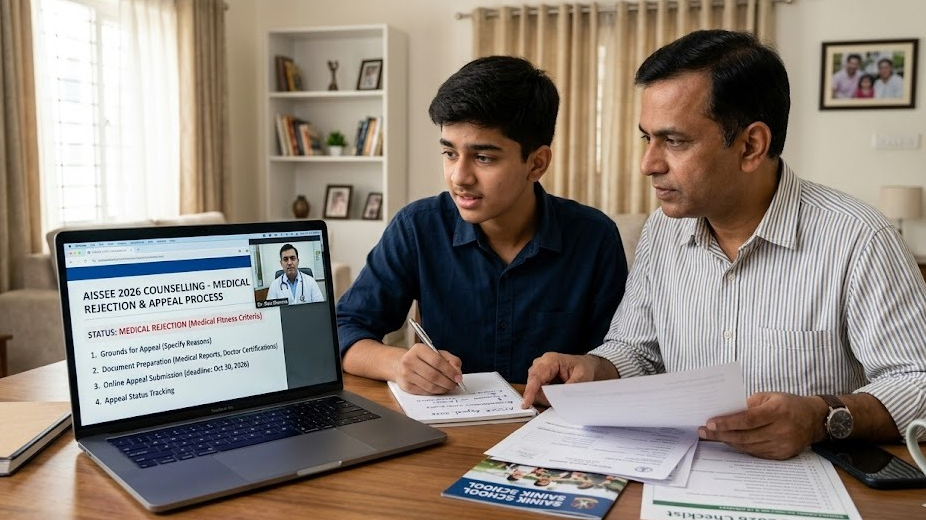
Before you accept it as final, understand this: it is not always final. There is a formal appeal mechanism. It has worked for families before. But it has a narrow window and specific requirements - and most parents don't know the exact steps.
Here's the complete guide.
First - Understand What "Medically Unfit" Actually Means
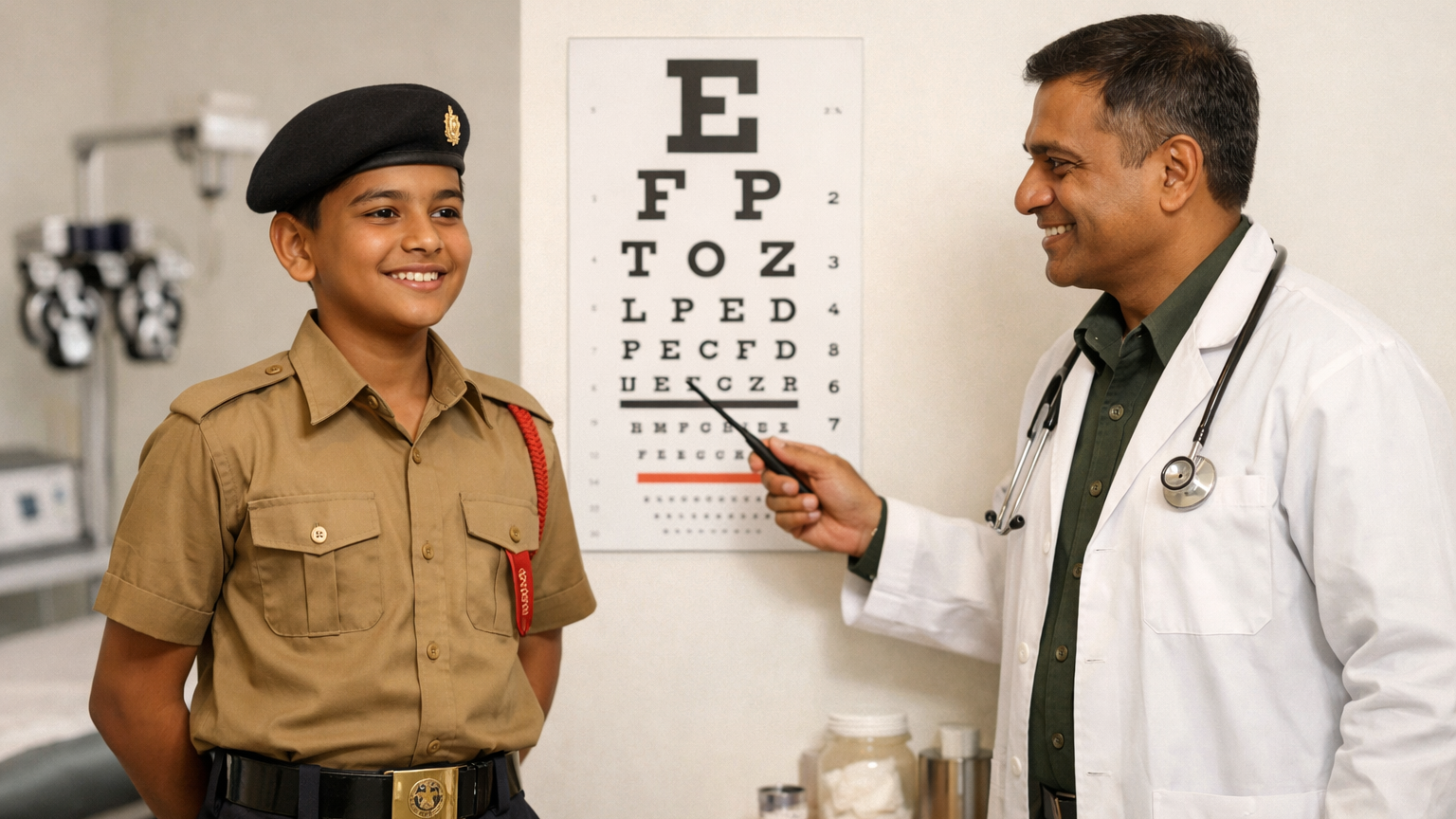
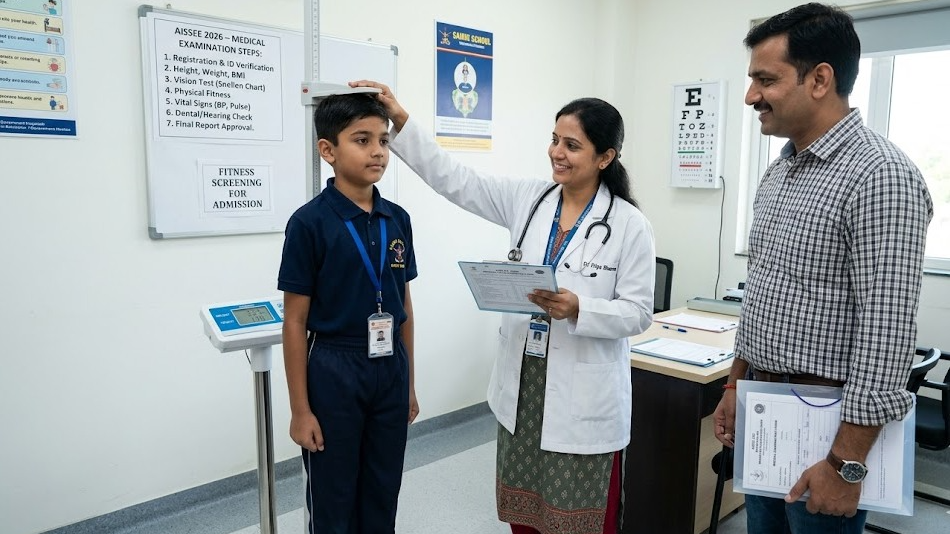
The Sainik School medical examination is detailed and systematic. Doctors check vision, hearing, overall health, heart, lungs, ENT, skin, speech, kidneys, and bones during the medical test.
Common reasons for an unfit verdict include eye power beyond the acceptable limit, flat feet or knock knees, cardiac irregularities, hearing issues, skin conditions, or speech difficulties. Some of these are structural - difficult to dispute. Others are borderline conditions where the examining doctor's judgment on the day plays a role - and where a second opinion from a senior specialist can legitimately change the outcome.
Conditions such as knock knees and flat feet are not eligible for admission. Kidney function must be normal. Chronic or severe skin conditions that could cause disability or disfigurement are disqualifying. There should be no history or signs of mental illness, epilepsy, or persistent bedwetting.
If your child's condition falls clearly within these absolute grounds for rejection, an appeal is unlikely to succeed. But if the finding was borderline, situational, or potentially assessed incorrectly - that is exactly the scenario the appeal process exists for.
Step 1 - Wait for the Formal Unfit Letter
You cannot begin the appeal process based on a verbal finding at the examination centre. The formal process starts with a written notice from the school.
The school sends a written notice to students declared unfit by doctors. This notice gives parents clear information about the specific health issue or defect that caused rejection.
Read this letter carefully. It tells you precisely which medical finding caused the rejection. That specific finding is what your appeal must address - point by point. Don't file a general appeal saying "we disagree." Address the exact condition named.
Step 2 - Act Within 15 Days - No Exceptions
This is the most critical thing to understand about the appeal.
Parents or guardians have 15 days from the day they receive the unfit letter to appeal to the Principal of the school.
Fifteen days. Not from the date of the medical examination. From the date you receive the written notice. If the letter takes a few days to arrive by post, your clock starts when you receive it - so open it the moment it arrives and start moving immediately.
Missing this window closes the door completely. There are no extensions granted after the deadline passes.
Step 3 - Get a Certificate From a Government Specialist Doctor
This is where most families either succeed or fail. The appeal doesn't work on goodwill or parental conviction. It requires specific medical documentation.
Any appeal must be supported by a medical certificate issued by a Government Specialist Doctor. The doctor must have reviewed the school's rejection letter and be aware of the specific medical issue noted. A thorough examination of the candidate must have been carried out with particular attention to that condition. The certificate must state that in the doctor's professional opinion, the candidate is medically fit despite the earlier assessment.
Three things the certificate must confirm:
One - The doctor has read the school's unfit letter and knows exactly what condition was flagged.
Two - The doctor has conducted a proper examination of your child with specific attention to that condition - not a general checkup.
Three - The doctor's professional opinion is that the child is medically fit, despite the earlier finding.
A general fitness certificate from a private clinic will not serve the purpose. It must be a government specialist - for example, a government ophthalmologist for an eye condition, a government orthopaedic for a bone issue. The word "specialist" matters. A general practitioner from a government hospital is not sufficient.
Candidates can appeal to the Principal for a review of the medical examination if they provide a competent medical opinion within 10 days of the final merit list publication at some schools. Note that the timeline may differ slightly by school - always go by what the unfit letter from your specific school states.
Step 4 - Pay the Review Fee and Submit the Appeal
Parents must pay the medical review fee when they appeal - Rs 100 for General category and Rs 50 for SC/ST candidates.
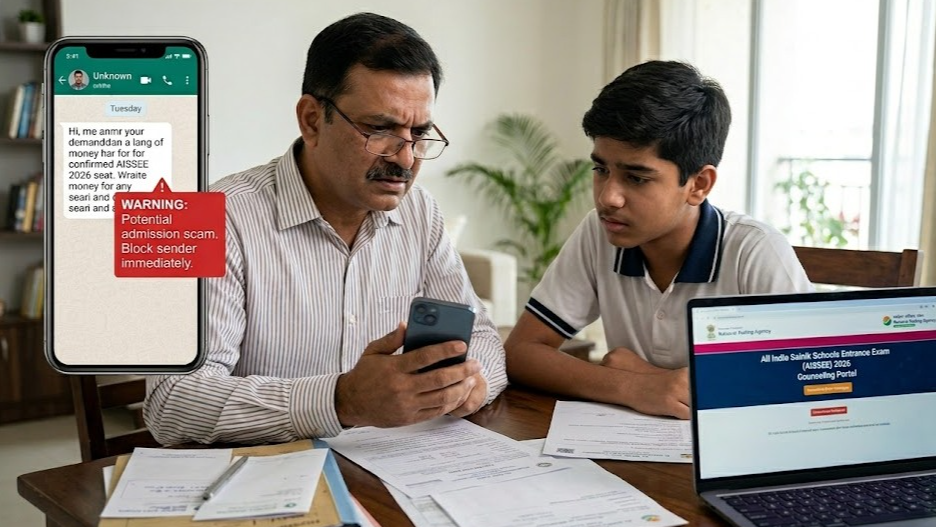
This small fee accompanies the formal appeal submission to the Principal. Do not confuse this with the fraudulent "fees" that scammers ask for. This is a nominal, official fee payable directly to the school - not to any agent or third party.
Your appeal submission to the Principal should include:
- A formal written appeal letter addressed to the Principal
- The original unfit notice received from the school
- The medical certificate from the Government Specialist Doctor
- Proof of payment of the review fee
- Your child's AISSEE ↗ application number and roll number
Keep copies of every document you submit. Send the appeal through a trackable channel - registered post or in person - so you have proof of delivery within the 15-day window.
Step 5 - What Happens After the Appeal Is Filed
Once the Principal receives your appeal, the case goes to the Review Medical Board.
If the Review Medical Board finds the candidate medically fit, the school will restore the candidate's name to the admission list according to their merit position. In such cases, the medical review fee will be refunded. If the Board again declares the candidate medically unfit, the decision will be treated as final, and no further appeal will be considered by the school.
While the appeal is under process, the Principal has the authority to place the admission on hold, ensuring that the candidate's seat remains reserved until the final medical decision is made.
This is significant. Your child's seat doesn't automatically disappear while the appeal is pending. The Principal can hold it. Make sure your appeal letter specifically requests this - ask the Principal to place the admission on hold while the Review Board process is ongoing.
Step 6 - Attend the Review Medical Board Examination
If your appeal is accepted, your child will be called to appear before the Review Medical Board. This is a formal medical re-examination - not a conversation or a paperwork review. Your child must physically present themselves.
All expenses related to travel, accommodation, and any other costs incurred during the medical review process must be borne by the parents or the candidate.
Plan for this. The review board examination may be at a different location than the original medical centre. It may require an overnight stay. Budget for it in advance, because if your appeal is accepted and your child is found fit, the fee is refunded - but the travel and accommodation costs stay with you regardless of the outcome.
What Happens If the Review Board Also Says Unfit?
If the Review Medical Board again declares the candidate medically unfit, the decision is treated as final. No further appeal will be considered by the school.
This is the hard truth. There is no third appeal. No higher escalation within the school or SSS. If the Review Board upholds the rejection, that verdict is final for this admission cycle.
At that point, the realistic path forward is to consult medical specialists about whether the condition can be treated, corrected, or managed before the next AISSEE cycle. Some conditions - like a correctable visual issue or a treatable ENT problem - can be addressed between cycles. Others are structural and unlikely to change.
What you should never do at this stage is pay any agent or "contact" claiming they can reverse a Review Board finding. They cannot. Anyone making that claim is either mistaken or fraudulent.
Conditions That Are Not Appealable in Practice
Some findings are absolute rejections where an appeal is very unlikely to succeed regardless of the specialist certificate. These include severe eye power beyond the limits, structural knock knees or flat feet with confirmed clinical measurement, confirmed cardiac conditions, epilepsy, and certain ENT findings.
Remedial operations should be done before entry - but there is no guarantee of acceptance even after such corrections.
If your child had corrective surgery for a condition before the medical examination, bring all surgical records and post-operative clearance certificates. The examining board will consider these, but the final determination rests with the medical officers.
A Note on Timeline and Your AISSAC Status
While the appeal is running, stay active on the AISSAC portal. Check whether your seat status is showing as "on hold" as requested. Failure to complete the medical process within the stipulated time results in disqualification from the counselling process. This rule applies to those who don't engage - not to those who have formally appealed and are waiting for the Review Board.
But don't assume everything is automatically paused. Follow up with the school if you don't receive confirmation that the hold has been placed on your child's admission.
A medical rejection is devastating in the moment. But the appeal process exists precisely because borderline findings happen and first examinations are not always perfect. Use the process, use the timeline, and use the right documentation - and give your child every legitimate chance at that seat.