The timing of the call is never random.
It comes within days of a child receiving an unfit finding at the Sainik School medical examination. The caller knows about the rejection. They know which school it was at. They sound informed, empathetic, and official. And they have a solution - for a price.
Fake medical calls targeting AISSEE ↗ 2026 families are the most targeted form of Sainik School fraud. The fraudster knows exactly when the family is most desperate, most willing to consider options they'd normally reject, and most likely to pay without thinking clearly.
Here's how to recognise them - and what to do.
Why Medical Round Fraud Is the Most Dangerous Type
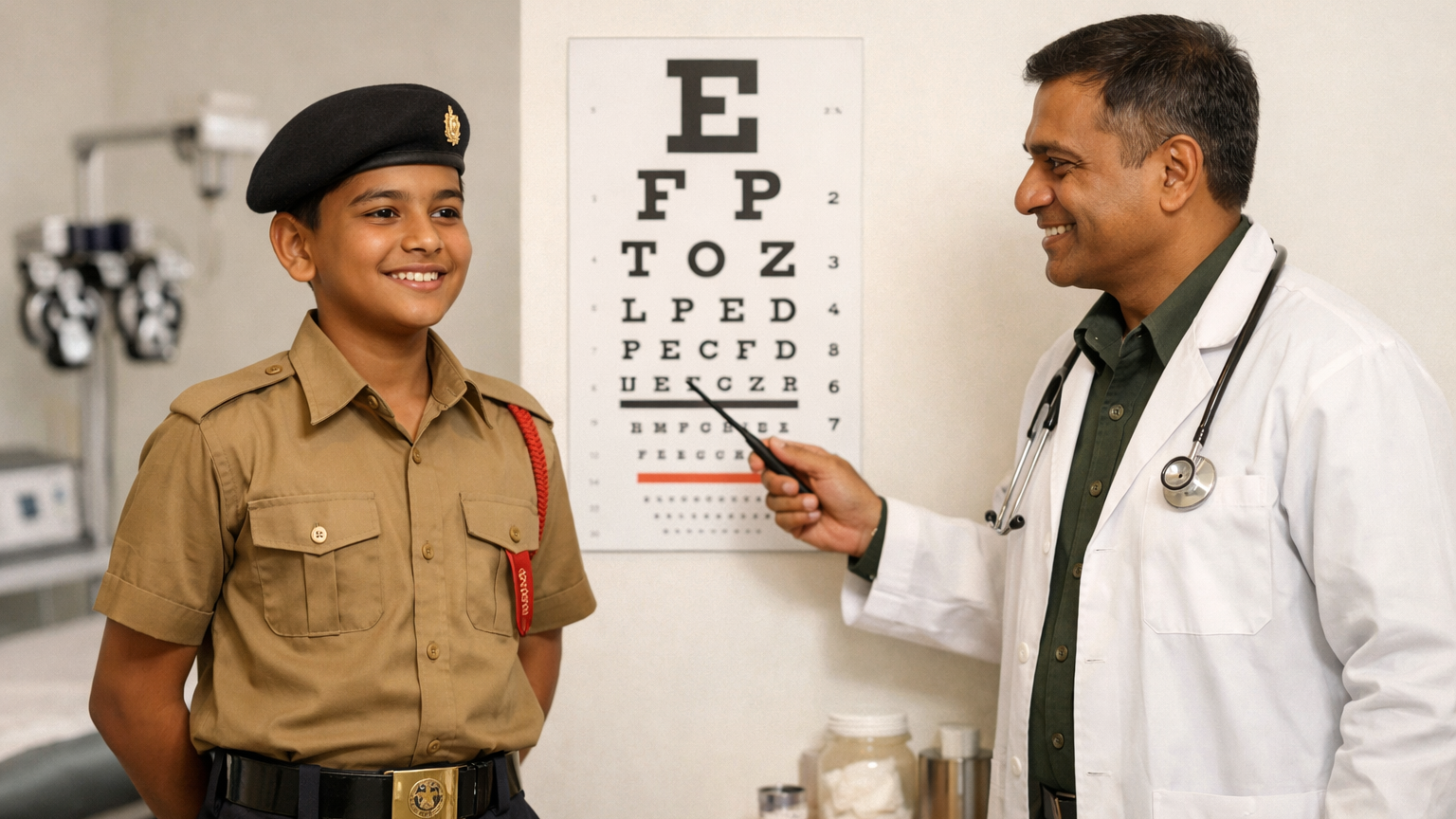
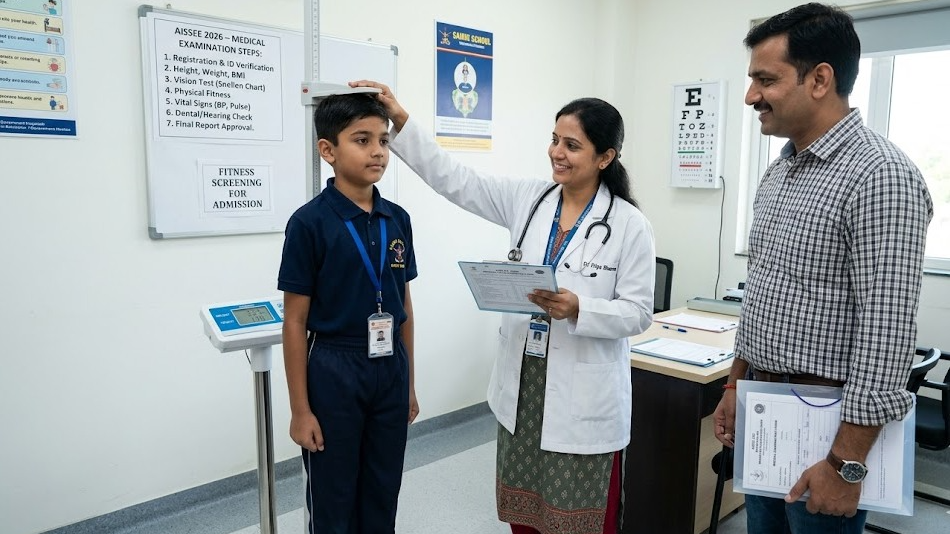
Every other scam in the Sainik School admission process targets families before they have a confirmed problem. Medical fraud targets families in genuine crisis - a child who qualified the written exam, cleared the counselling, accepted a seat, and then failed the medical examination.
The emotional weight of that sequence is significant. Months of preparation. The relief of the seat allotment. The travel to the medical centre. And then the unfit stamp.
At that precise moment of maximum anxiety, when parents would do almost anything to reverse the outcome - that's when fraudsters make contact. The timing is deliberate. The vulnerability is exploited.
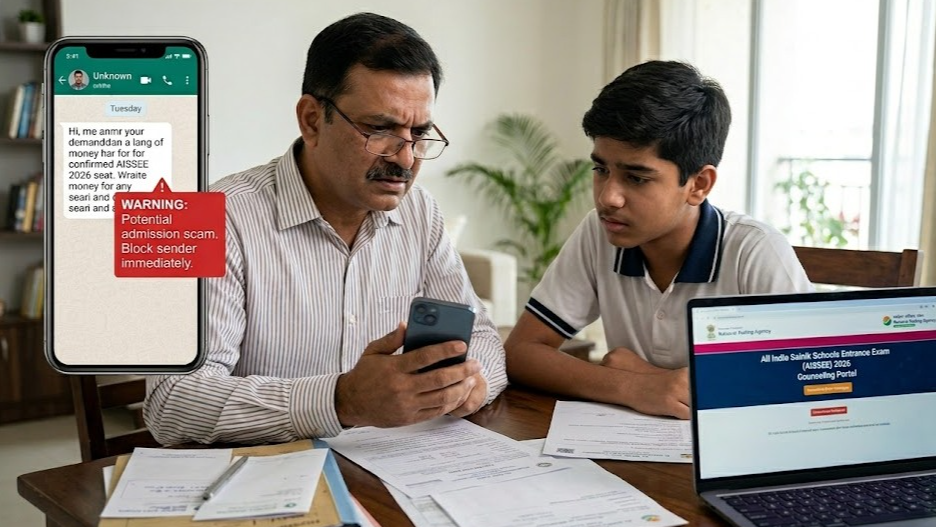
Fake agents approach families during the AISSEE 2026 medical round with promises to "fix" unfit findings - for money. This has been documented across multiple AISSEE cycles and is not a hypothetical risk.
What a Fake Medical Call Looks Like
The call follows a recognisable pattern. Knowing it in advance neutralises it.
The opening: The caller identifies themselves as someone connected to the school's medical process - sometimes as a "coordinator," sometimes as a "contact" at the Sainik School, sometimes as a representative of a firm that "handles medical appeals." They establish enough familiarity with the situation to sound credible.
The information they use: They know the child's name. They know the school. They know the exam result. Sometimes they know the specific medical finding. This information sounds authoritative - but it's either available through informal coaching networks, guessed based on common rejection types like vision issues, or obtained through someone in the family's own social circle who passed it along unknowingly.
The offer: The "contact" can arrange for the unfit finding to be changed. The medical report can be "corrected." The Review Medical Board can be influenced. For a fee - framed as "processing charges" or "arrangement fees" - this outcome can be secured.
The urgency: There's always a deadline. "The window for appeal closes in 3 days." "The medical board reviews cases this week only." "We need payment by tomorrow morning to file the paperwork." This urgency is fabricated - it's designed to prevent the family from taking time to verify.
The Specific Signs It's Fraudulent
Sign 1 - It's a phone call, not a portal notification
Genuine Sainik School medical communication happens through the official AISSAC portal and through letters from the school. An unfit finding is communicated in writing by the school. The Review Medical Board process is initiated by the parent - through a formal written appeal submitted to the school's Principal. No one from the school system calls you to offer to fix your medical outcome.
Candidates can get information about their Sainik School medical examination details and allotted medical examination centres from the official AISSAC counselling portal - not through unsolicited phone calls.
Sign 2 - They're offering to change the medical outcome for money
This is simply not possible through any legitimate channel. The Sainik School medical examination is conducted by government or military medical officers. The Review Medical Board is a formal official body. No private individual, no coaching institute, no "connected contact" can alter a government medical officer's clinical finding.
The legitimate appeal path - the only path - is a formal written appeal supported by a medical certificate from a Government Specialist Doctor, submitted to the school Principal within 15 days of the unfit letter. This is free. It goes through official channels. And it works if the medical finding is genuinely wrong - without paying anyone.
Sign 3 - They ask for cash or untraceable payment
Fraudsters almost universally request payment through channels that can't be traced back or reversed - cash, UPI to personal accounts, or money transfers to individuals rather than institutional accounts. Legitimate payments in the entire Sainik School process go directly to the school's official account. Any request for cash or personal UPI payment is a definitive fraud signal.
Sign 4 - The number can't be verified on official SSS contact lists
The official SSS contacts are: [email protected] and [email protected]. The SSS office number - if needed - appears only on sainikschoolsociety.in. Individual Sainik School contact details appear only on sainikschool.ncog.gov.in. If you receive a call from a number that cannot be found on any of these official sources - it is not an official call. There are fraudsters operating fake helplines during counselling season.
Sign 5 - They approached you, not the other way around
The entire Sainik School medical process - including appeals - is initiated by the family, not by the school. The school sends you an unfit letter. You then decide whether to appeal. The school doesn't send agents to help you navigate the appeal for a fee. Anyone who contacts you proactively with help for your medical situation has obtained your information through non-official channels and is not acting in your interest.
What a Genuine Medical Rejection and Appeal Looks Like
So you can clearly distinguish the real process from the fake one.
If your child is declared medically unfit, the school sends a written notice stating the specific medical finding. Parents have 15 days from the day they receive the unfit letter to appeal to the Principal. Any appeal must be supported by a medical certificate issued by a Government Specialist Doctor - one who has reviewed the school's rejection letter, is aware of the specific medical issue, and has examined the child specifically with attention to that condition.
A small review fee - Rs 100 for General, Rs 50 for SC/ST - is paid directly to the school when submitting the appeal. Not to any agent, not to any helpdesk. To the school itself.
If the Review Medical Board finds the candidate medically fit, the school restores the candidate's name to the admission list according to their merit position and refunds the review fee. If the Board again declares the candidate unfit, the decision is final.
That's the entire legitimate process. No calls. No agents. No guaranteed outcomes for payment. Just a formal written appeal with proper medical documentation submitted directly to the school Principal.
How to Report a Fake Medical Call
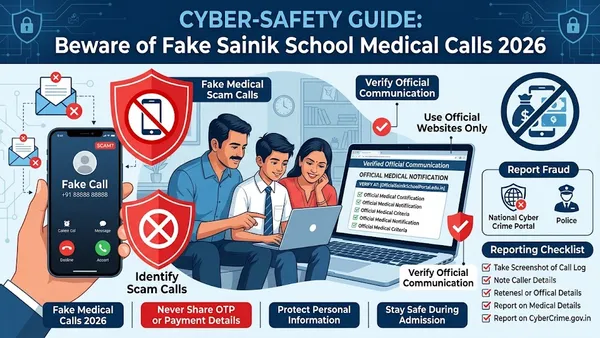
If you receive a call matching any of the patterns above, take these steps immediately:
Do not pay anything. No matter how convincing the caller sounds. No matter how close the deadline they're claiming. Paying makes recovery harder and doesn't produce the outcome they promised.
Note the number and the content of the call. Write down the phone number, date and time of the call, what was said, and any payment request details. This documentation is needed for reporting.
Report to official channels immediately:
- Email [email protected] and [email protected] with the details
- Email the specific school directly through their official contact on sainikschool.ncog.gov.in
File a complaint on the National Cyber Crime portal at cybercrime.gov.in. Phone fraud targeting families for money is a criminal offence under Indian law - specifically the IT Act and IPC provisions covering fraud and cheating. These cases are prosecutable. Filing a complaint also helps authorities identify patterns and take action against organised fraud operations targeting AISSEE families.
Alert your local parent network. Once you've confirmed a call was fraudulent - warn other families in your coaching circle, parent group, and community. Fraudsters work at scale, contacting many families with the same script. A warning to the network you're part of could prevent someone else from losing money.
The One Thing That Protects You
It's simpler than any checklist.
The official AISSAC 2026 process is free. No one calls you to help with it. Any payment request is fraud. Any unsolicited call about your child's medical status is either fraud or someone who obtained your information through channels that weren't authorised to share it.
When you receive a concerning call - slow down. Don't respond under pressure. Take 24 hours, verify through official channels, consult another family or your child's school. The legitimate process will still be there after those 24 hours. The fraudster's "limited window" will not.
Your child worked hard to get to the medical stage. The legitimate appeal process exists and it works - without paying anyone. Use the real system.