Welcome to Sainik Guru
Sign in to access mock tests, track your progress, and more
By signing in, you agree to our Terms and Privacy Policy

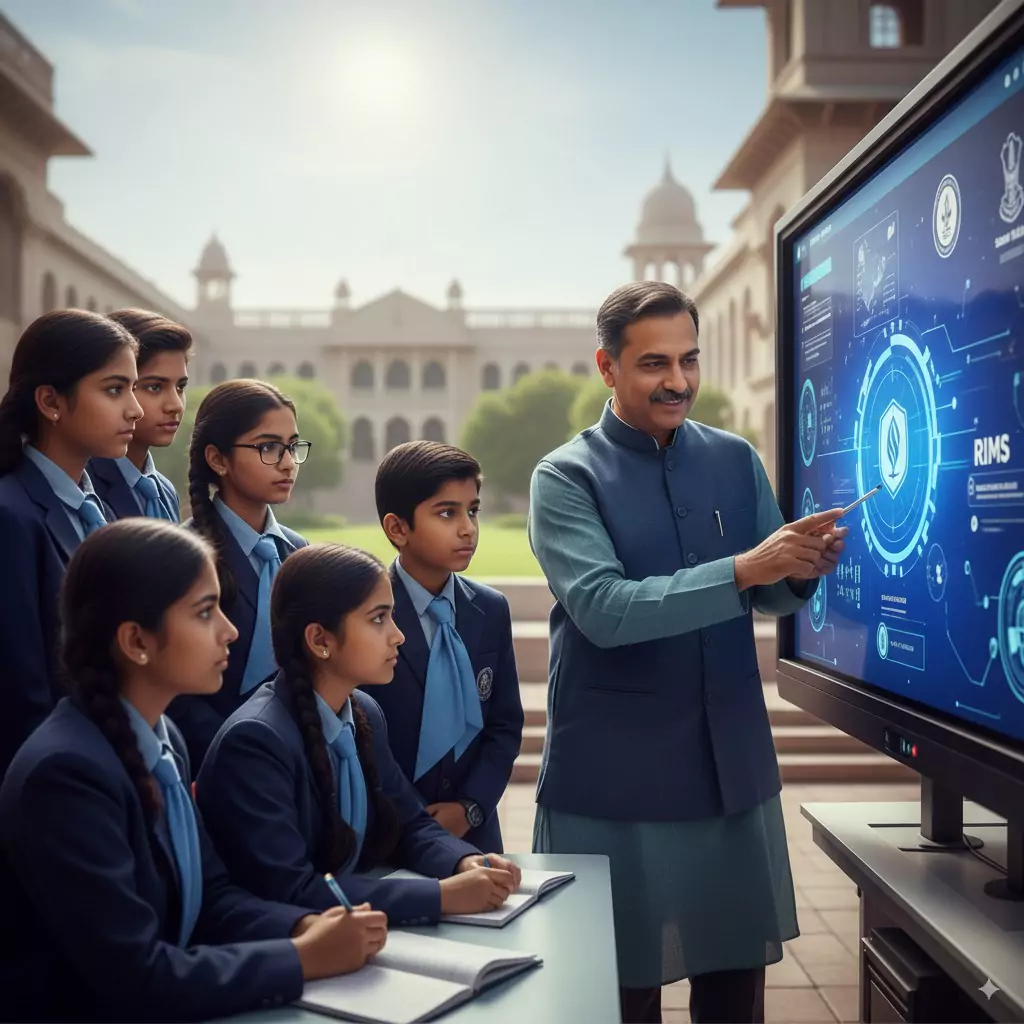
Barnala — Manchester of Punjab, once capital of Patiala Riyasat's Nizamat. SainikGuru offers AISSEE coaching — Intelligence training, real mocks. Punjab state quota. April start.
Question 1 of 5
We provide comprehensive coaching with proven methodologies and expert faculty to ensure your success in Sainik School entrance exams.
Take free mock tests and get detailed solutions. Know exactly where you stand!
Complete practice tests with real exam patterns and previous year question papers.
Step-by-step explanations with performance analysis and common mistake alerts.
World-class online education with expert faculty
Daily interactive sessions
Direct doubt clearance
Digital resources
Regular practice tests
Exam environment
State-of-the-art facilities for students
Quiet learning spaces
Nutritious meals
24/7 security & CCTV
Recreation areas
Round-the-clock support
Find answers to common questions about our coaching programs
Barnala was once the capital of a Nizamat.
Before Patiala state's full reorganisation, Barnala was the headquarters of a Nizamat (administrative division) covering three tehsils - Mansa, Bathinda, and Barnala itself. When Pepsu was formed in 1948 and later merged into Punjab, Barnala lost that administrative seniority. It became a sub-division. In 2006, it regained district status - Punjab's 23rd district, carved from Sangrur.
"Manchester of Punjab" - textile mills and agro-machinery manufacturing. Malwa region. District population 595,527 (2011), city 116,450.
Punjab has Sainik School Kapurthala - 67% Punjab state quota. Barnala families compete within Punjab only.
Pattern recognition, number series, analogies, spatial reasoning. Untrained: 20-25%. After 16 weeks from April: 70-80%.
Pattern recognition - the precise mechanism, phase by phase
Phase 1 (Weeks 1-4): The child develops a scanning checklist - orientation, count, shading, form. This checklist is what shifts performance from "guessing" (20-25%) to "systematic checking" (38-46%).
Phase 2 (Weeks 5-8): Compound patterns. Two rules operating simultaneously - AISSEE ↗'s hardest category. The child learns to ask, after applying Rule 1: "Is there still unexplained variation?" If yes, find Rule 2. This double-check is a habit, not a concept - it requires repeated encounters with compound patterns to form. 55-65%.
Phase 3 (Weeks 9-12): Speed. The checklist must run automatically, in 10-15 seconds, leaving time for the answer. 65-72%.
Phase 4 (Weeks 13-16): Full AISSEE mocks. Section-wise diagnosis identifies which specific pattern types each child still misses. 70-80%.
October = Phase 2 half-built by January. The compound questions - worth significant marks - catch these children specifically.
Number series - textile-industry arithmetic and the AISSEE trap
Barnala's textile and agro-machinery manufacturing economy produces children with strong technical and commercial arithmetic. The number series section is designed for exactly this profile.
15+ series types: geometric, arithmetic, triangular, perfect squares, perfect cubes, Fibonacci-based, alternating, second-order AP, ratio-based, prime-based, factorial, and combinations.
A child who has encountered each type 15-20 times from April recognises them on sight - 6-8 seconds. A child encountering a type for the first time in the exam calculates - 60-90 seconds, exceeding AISSEE's 45-second budget.
By August (from April start): functional recognition across all types. By November: automatic under pressure. October start: 8-10 types covered adequately, the rest unprimed.
Analogies and spatial reasoning
Verbal: Punjabi-Hindi bilingual. Strong vocabulary from Punjabi's rich oral and literary tradition. 66-73% verbal accuracy without training. Numerical and logical: 6 weeks each.
Spatial: Barnala is flat Malwa plains. First-mock: 18-24%. April training: 62-70%. October: 44-53%.
Patiala State's Nizamat structure (Barnala's historical role): princely state administrative history - testable AISSEE pre-independence India.
"Manchester of Punjab" (Barnala): India's industrial city nicknames - testable.
PEPSU formation (1948) and merger into Punjab (1956): post-independence state reorganisation - testable constitutional history.
Rameshwaram floating stone (Nathwala Dera, near Barnala): unusual geological phenomena - testable science/nature GK.
Eight students. One specialist per section. Weekly mocks. Section-wise diagnosis. October conversation. OMR from day one.
Class 6 - Age 10-12. March 31 cutoff. Class 9 - Age 13-15. March 31 cutoff.
Reach SainikGuru at sainikguru.com - fill the form. Same-day callback.
Get in touch with us for admissions, course information, and any other queries related to Sainik School coaching in Barnala.
Live Classes 4:30 PM – 6:30 PM • AISSEE, RIMC, RMS • All Cities of India