Welcome to Sainik Guru
Sign in to access mock tests, track your progress, and more
By signing in, you agree to our Terms and Privacy Policy

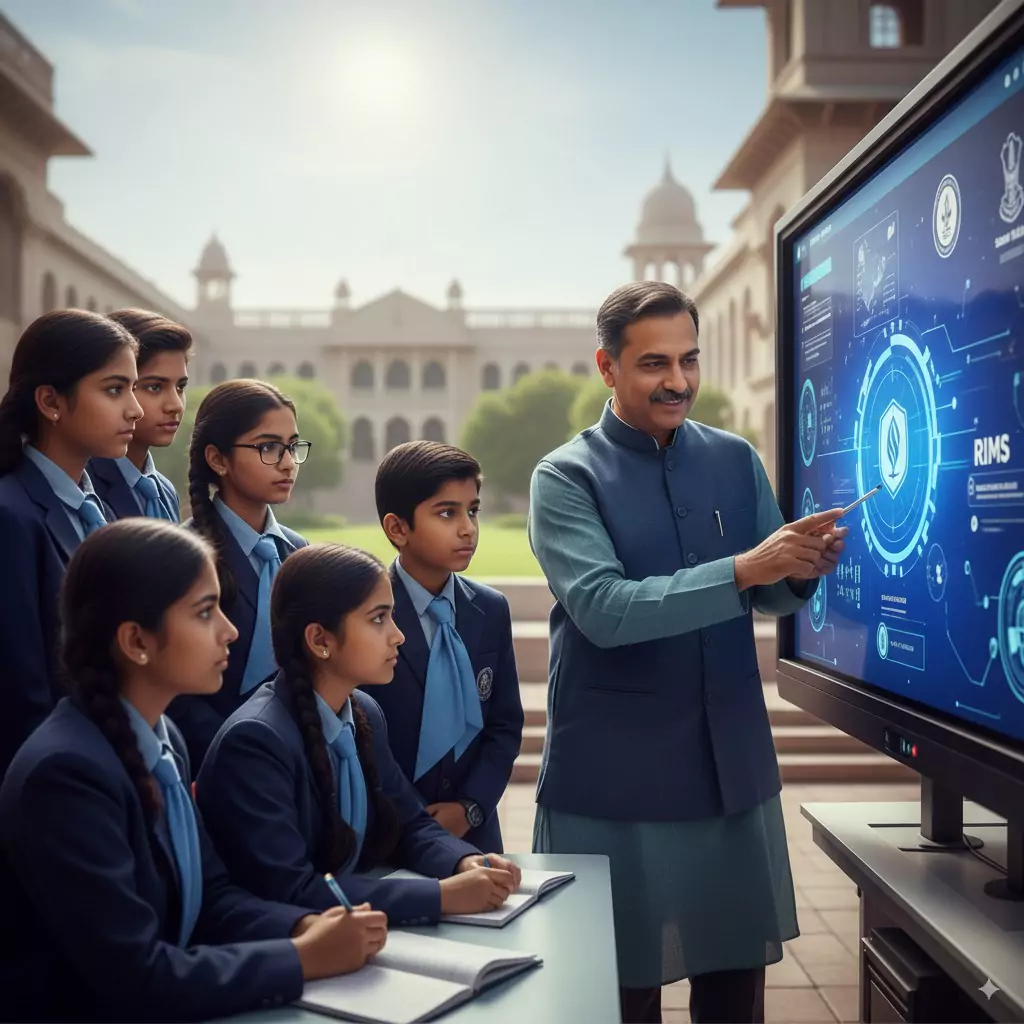
Churachandpur — Lamka, mosaic of tribes, 82% literacy, highest hill terrain in Manipur. SainikGuru offers AISSEE coaching with Intelligence training. Manipur quota. April start.
Question 1 of 5
We provide comprehensive coaching with proven methodologies and expert faculty to ensure your success in Sainik School entrance exams.
Take free mock tests and get detailed solutions. Know exactly where you stand!
Complete practice tests with real exam patterns and previous year question papers.
Step-by-step explanations with performance analysis and common mistake alerts.
World-class online education with expert faculty
Daily interactive sessions
Direct doubt clearance
Digital resources
Regular practice tests
Exam environment
State-of-the-art facilities for students
Quiet learning spaces
Nutritious meals
24/7 security & CCTV
Recreation areas
Round-the-clock support
Find answers to common questions about our coaching programs
Lamka. That's what the locals call it.
"Roads meeting at a mouth" in Paite. Second largest town in Manipur after Imphal. Named after Maharaja Churachand Singh by a colonial interpreter in 1921. Altitude 350-1,950 metres - dramatic hill terrain across 4,570 square kilometres. 92.94% Scheduled Tribe population. Literacy 82.78% - second highest in Manipur, a direct result of missionary-run English-medium schools going back over a century. Christianity 93%.
Manipur state quota at Sainik School Imphal. 67% of seats for Manipur children. Churachandpur families compete within Manipur only.
School preparation, however strong, covers three of four AISSEE ↗ sections. Intelligence - pattern recognition, number series, analogies, spatial reasoning - is absent from every school curriculum in India.
This includes Churachandpur's missionary-run English-medium schools. Excellent for English. Excellent for GK and comprehension. Zero coverage of Intelligence skills.
Untrained accuracy: 20-25%. After 16 weeks from April: 70-80%.
That gap is where Manipur state quota selections are decided.
Pattern recognition - why 16 weeks is the minimum, not a recommendation
The skill being built is cognitively specific: deriving hidden rules from examples, without being told the rule. School trains the opposite - applying stated rules. Years of excellent school performance don't build rule-derivation.
Training builds it systematically. Here's why 16 weeks cannot be compressed:
Weeks 1-4 establish foundations. The child learns that visual sequences have scannable properties. Orientation, element count, shading, form. The scanning habit forms through 50+ questions per session. By week 4: 38-45% accuracy. The child can reliably solve single-rule sequences.
Weeks 5-8 introduce compound patterns. These are AISSEE's hardest - two rules operating simultaneously. A child who hasn't completed weeks 1-4 cannot handle compound patterns. The foundation is prerequisite. By week 8: 55-65% accuracy on compound sequences.
Weeks 9-12 build speed. Accuracy without speed doesn't work in AISSEE's 45-second-per-question framework. Speed requires that the scanning checklist runs automatically, without conscious effort. This automaticity builds through timed repetition across weeks 9-12. Accuracy: 65-72%.
Weeks 13-16 consolidate with full mocks. Every mock identifies specific weak pattern types. Each child's diagnostic profile guides the final reinforcement. Accuracy: 70-80%.
October start completes weeks 1-10 by January. The compound pattern skill is still forming. Speed is partially developed. Accuracy: 55-60%.
The 15-20% gap on a 50-mark section ends selections.
Number series - how Churachandpur's multilingual background creates an advantage
Churachandpur has one of Manipur's most linguistically diverse populations. Paite, Thadou, Hmar, Vaiphei, Zomi, Meitei, Hindi, English - children often navigate four to six languages by the time they reach Class 5.
This multilingual background creates stronger verbal analogy foundations than monolingual children. But it also creates stronger number sense - children who translate between languages, who navigate multiple cognitive frameworks simultaneously, often show better abstract pattern recognition progress than children with single-language backgrounds.
For number series specifically:
The 15+ AISSEE series types each need to be encountered 15-20 times before they become recognisable on sight. April practice covers this. Weekly mocks expose children to all 15 types repeatedly. By August: functional recognition. By November: automatic.
October practice covers roughly 8-10 types adequately. Complex types - Fibonacci (1, 1, 2, 3, 5, 8...), factorial (1, 2, 6, 24, 120...), prime-based (2, 3, 5, 7, 11...) - come last in the programme. October start often doesn't reach them fully before January.
Prime number series cannot be solved by calculation. There is no formula for primes. A child who hasn't been trained to recognise prime series will see 2, 3, 5, 7, 11 and calculate differences (1, 2, 2, 4) - no obvious pattern - and give up. A trained child sees the first three numbers and thinks "prime series" immediately.
Analogies - three types, three different training requirements
Churachandpur's multilingual tribal background is the strongest natural advantage on verbal analogies in Manipur.
Navigating six languages builds relationship-identification instincts. Verbal analogy accuracy without training: typically 68-76% - above the state average.
But verbal advantage applies to only one-third of the analogy section.
Numerical analogies (6:36::7:49 - both pairs are perfect squares): no language advantage. Six weeks of targeted training: 30% untrained to 70%+.
Logical/figure analogies (transformation rules applied to shapes): no language, no mathematics helps. Six weeks: 20% to 65%+.
Total analogy improvement from full training: 8-12 marks above the tribal multilingual baseline.
Spatial reasoning - the altitude advantage
Churachandpur's terrain is the most dramatic in Manipur. 350 metres to 1,950 metres. Khuga valley. Southern Naga Hills. Rivers dropping through gorges. Rice paddies on terraced slopes.
Children who grow up navigating this terrain develop three-dimensional spatial cognition that flat-plains children don't have.
First-mock spatial accuracy for Churachandpur children: typically 34-44%. Among Manipur's highest.
Six to eight weeks of progressive spatial training from April: 70-78% accuracy.
October start: 54-64%. The altitude advantage is present - but the training arc doesn't have consolidation time. The difference between April (70-78%) and October (54-64%) is 16-20% on questions worth 10-15 marks.
In Manipur's competitive state quota pool, 16% on spatial alone is the selection margin.
Churachandpur during WWII: Japanese aerial attack - the district's position in the WWII Burma theatre, Japanese advance into Manipur - testable WWII India history GK.
Missionary school impact on literacy: Manipur's Christian demographic history, literacy patterns in Northeast India - testable cultural history.
Chin-Kuki-Mizo-Zomi tribes: Northeast India tribal geography - testable AISSEE GK.
Manipur state quota at Sainik School Imphal: Manipur's 2.7 million population, 67% of seats - structural advantage for Churachandpur families.
Eight students per batch. One specialist per section.
Weekly mocks from month one. Real AISSEE format. Real OMR. Real time. Section-wise diagnosis after every mock - not a score, a map.
October parent conversation. OMR practice from day one. Medical round preparation throughout.
Class 6 - Age 10-12. March 31 date of birth cutoff. Absolute. Maths · English · GK · Intelligence Test
Class 9 - Age 13-15. March 31 cutoff. Maths · English · GK · Science · Social Studies
Check the date of birth now.
The online batch removes all terrain barriers. Same teachers, same weekly AISSEE-format mocks, same section-wise diagnosis - from any valley or hillside in Churachandpur district.
Families compare notes - some checking Sainik school coaching in Telangana fees - because when preparation works, the altitude stops mattering.
April: altitude terrain spatial advantage fully converted (70-78%), compound pattern skill completes (weeks 5-8), prime and factorial series recognition built (weeks 14-16). January - prepared.
October: spatial at 54-64%, compound patterns forming, complex series types unreached. January arrives first.
Reach SainikGuru at sainikguru.com - fill the form. Same-day callback on working days.
Get in touch with us for admissions, course information, and any other queries related to Sainik School coaching in Churachandpur.
Churachandpur, Manipur, India
Live Classes 4:30 PM – 6:30 PM • AISSEE, RIMC, RMS • All Cities of India