Welcome to Sainik Guru
Sign in to access mock tests, track your progress, and more
By signing in, you agree to our Terms and Privacy Policy

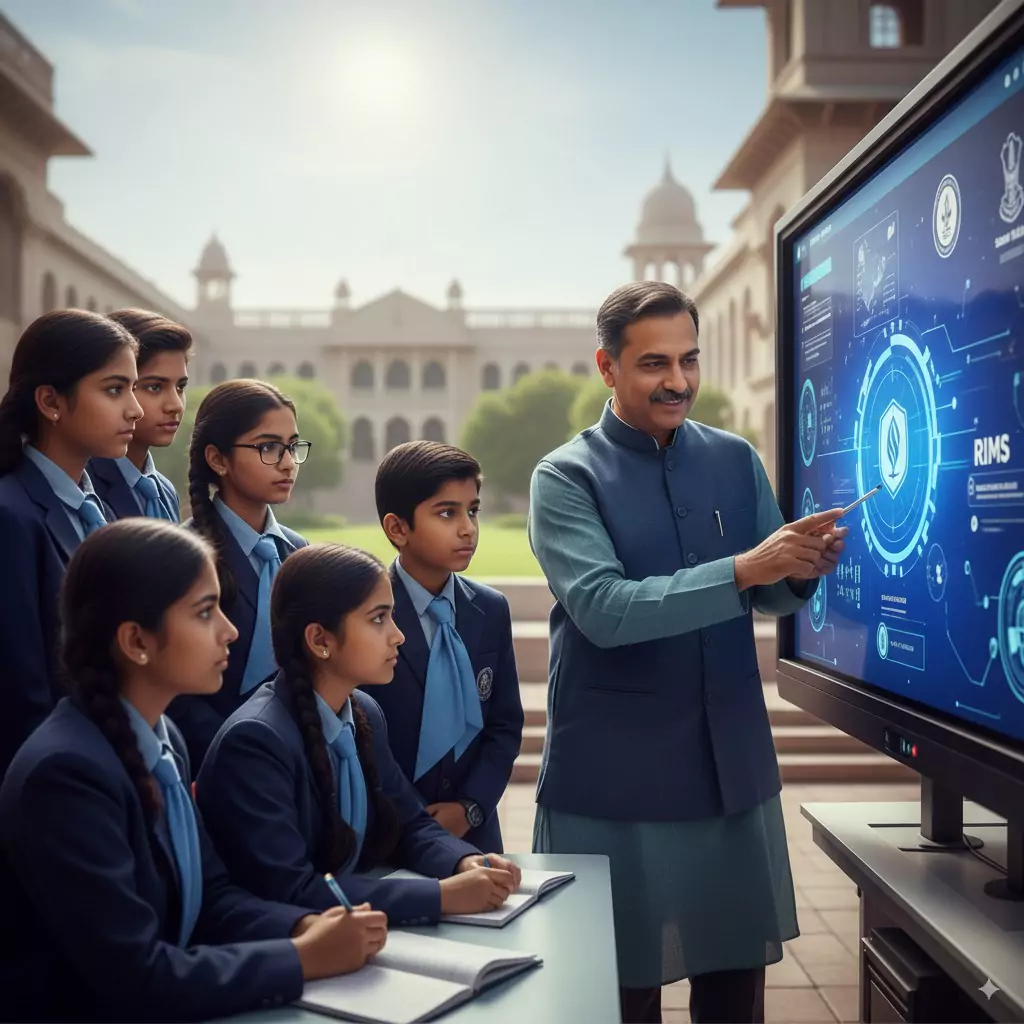
Dabwali sits where Haryana, Punjab and Rajasthan meet. AISSEE doesn't care about borders — it cares about Intelligence training. SainikGuru. Start April.
Question 1 of 5
We provide comprehensive coaching with proven methodologies and expert faculty to ensure your success in Sainik School entrance exams.
Take free mock tests and get detailed solutions. Know exactly where you stand!
Complete practice tests with real exam patterns and previous year question papers.
Step-by-step explanations with performance analysis and common mistake alerts.
World-class online education with expert faculty
Daily interactive sessions
Direct doubt clearance
Digital resources
Regular practice tests
Exam environment
State-of-the-art facilities for students
Quiet learning spaces
Nutritious meals
24/7 security & CCTV
Recreation areas
Round-the-clock support
Find answers to common questions about our coaching programs
Three states meet at Dabwali.
Haryana on one side. Punjab 40 kilometres away - Bathinda is closer than Sirsa. Rajasthan touching the southern edge. The town grew as a mandi - a market where farmers from all three states brought their produce. Agricultural tools. Jeep modification parts. A border economy that runs on practical intelligence and cross-cultural trade.
Punjabi is the main language here. Haryanvi, Bagri, and Rajasthani fill the rest. This isn't a typical Haryana town - it sits at a cultural junction that has shaped how people here think, communicate, and see the world.
On December 23, 1995, a fire at a school prize distribution event killed 442 people - mostly children. The Dabwali fire tragedy is part of this town's identity. Families here know what is at stake when children gather, and what it means to protect them.
Those same families are now looking at Sainik Schools. A defence career. A uniform. A future built on something solid.
Most of them don't yet know what AISSEE ↗ specifically requires.
Dabwali families are practically intelligent. Cross-cultural. Multilingual. Commercially aware.
These are genuine cognitive strengths. They don't transfer to the Intelligence section of AISSEE.
The Intelligence section - pattern recognition, number series, analogies, spatial reasoning - is not a test of general intelligence, cultural awareness, or practical ability. It tests specific cognitive patterns that school never teaches. Anywhere. In Haryana, Punjab, Rajasthan, or any other state.
A Dabwali child's trilingual fluency helps zero on spatial reasoning. Their agricultural spatial intelligence - genuine and practical - doesn't transfer to cube-net construction under 45-second time pressure. Their commercial pattern recognition from the mandi - also genuine - doesn't map to number series problems in AISSEE format.
Different skill. Needs specific training.
Pattern Recognition
A series of figures where each follows a hidden rule. Or numbers where the structure isn't named but must be derived. The task: identify the rule, predict the next element.
School teaches application of known rules. This requires derivation of unknown rules. The cognitive distinction matters enormously. Children who've built a pattern library through weekly practice from April recognise AISSEE patterns on sight. Children who haven't - reason from scratch every time, under time pressure, and often get it wrong.
The pattern library takes six to eight weeks to build to functional level. It takes sixteen weeks to build to confident level. Starting in April provides both. Starting in October provides neither.
Number Series
Dabwali's agricultural community produces children who are often strong at mental arithmetic - buying, selling, calculating margins in the mandi.
AISSEE number series doesn't test mental arithmetic. It tests series-type recognition. The difference: a child who can rapidly calculate is useful; a child who can look at the first three terms of a series and immediately identify it as "differences form a geometric progression" is what AISSEE requires.
That recognition - for 15 or more different series types, across first-order, second-order, prime-based, alternating, and mixed progressions - builds through repeated encounter. Weekly practice from April. Not mental arithmetic training. Pattern exposure.
Analogies - The Multilingual Advantage and Its Limits
Dabwali's multilingual background is a genuine advantage for verbal analogies specifically. Children who move fluidly between Punjabi, Haryanvi, and Hindi often have stronger relationship-identification instincts in language domains than monolingual children.
That advantage is real and worth approximately 30-35% of the analogy marks.
The other 65-70% - numerical analogies and logical/figure analogies - don't benefit from language fluency at all. A multilingual Dabwali child and a monolingual Ambala child start from identical zero on numerical and logical analogy types if neither has specifically trained for them.
Targeted practice for each analogy type separately: verbal (builds on existing strength), numerical (builds relationship-pattern recognition), logical (builds figure transformation recognition). Together - typically 8-12 additional marks over untrained performance.
Spatial Reasoning
The mandi workers of Dabwali load trucks, arrange goods, navigate markets. Spatial intelligence is embedded in this community.
AISSEE spatial reasoning tests something different in format: mental rotation of abstract figures, 3D cube construction from flat nets, mirror images, paper folding under timed conditions. The underlying spatial capacity that Dabwali children have is real. The AISSEE-specific format needs to be learned.
Children with strong practical spatial intelligence who receive six weeks of AISSEE spatial training often improve faster than children with weaker spatial backgrounds. The capacity is there. The format translation needs specific work. Starting in April provides the six weeks needed.
A town at the intersection of three states has genuine geographic awareness. Dabwali families typically know Haryana, Punjab, and Rajasthan geography in detail - border districts, major cities, road networks, rivers.
This transfers directly to AISSEE GK's geography component. Real advantage. Typically worth 4-6 additional marks over children from less geographically diverse backgrounds.
The gap areas that need targeted coverage regardless:
Defence organisation specifics: Command headquarters, rank structures, famous military operations. Haryana's defence culture creates general awareness - targeted study creates the specific factual knowledge AISSEE tests.
Constitutional facts at article level: Article 21, Article 32, the names of constitutional bodies, specific amendments. General civics awareness from school covers the broad strokes. AISSEE tests the specific facts.
Science GK as static knowledge: Inventors, discoveries, full forms of scientific acronyms, specific dates. School Science teaches concepts. AISSEE GK tests facts. Needs its own coverage.
Systematic GK preparation from April - area by area, tested through weekly mocks - adds 10-15 marks for Dabwali children over general awareness. In Haryana's competitive state quota, those marks are decisive.
Dabwali's main spoken language is Punjabi. English is encountered primarily in school - as a subject, not as a communication medium.
AISSEE English comprehension tests reading speed and inference precision simultaneously. Short passages, dense information, "almost correct" options designed to trap imprecise readers. Under 90-second-per-passage time pressure, children who read in a third or fourth language without specific comprehension practice lose marks consistently.
Eight months of AISSEE-format comprehension practice from April closes this gap systematically. The improvement trajectory is predictable: by month three, most children are reading AISSEE passages at functional speed. By month six, inference accuracy is at a competitive level.
Three months from October doesn't produce this arc. It starts the arc. January arrives before it completes.
Mandi mental arithmetic creates confident Maths students in Dabwali. This confidence is an asset - and a specific risk.
AISSEE Maths questions are constructed to mislead children who apply standard methods quickly. A percentage problem where the obvious mental calculation approach produces a wrong answer. A ratio problem where reading quickly - which confident arithmetic children do - leads straight to the constructed error.
The fix isn't slower Maths. It's AISSEE-format familiarity. After 100 AISSEE Maths problems, the trap architectures become visible. The confident calculator stops being confident in the wrong way and starts being accurate in the right way.
Weekly mocks from April. Not harder Maths study.
Eight students per batch. One specialist per section.
Dabwali children in the online batch receive the same programme as children in Rohtak or Karnal. Weekly mocks from month one. Real AISSEE format. Real OMR. Real time. Section-wise diagnosis after every mock.
When spatial reasoning is consistently weak - the Intelligence specialist addresses it. When GK shows gaps in defence organisation - covered before the next mock. When English comprehension speed is the issue - targeted drill, not general English advice.
Honest parent conversation in October. OMR practice from day one. Medical round preparation throughout.
Kunjpura, Karnal. Rewari.
State quota - Dabwali children compete within Haryana only. Not against Punjab. Not Rajasthan. Just Haryana.
For a border town where families often feel peripheral to Haryana's mainstream, this is worth noting: state quota access is identical for Dabwali and Gurugram. The exam doesn't know which side of the border you're on.
Preparation is what makes it count.
Class 6 - Age 10-12. March 31 cutoff. Class 9 - Age 13-15. March 31 cutoff.
Check the birth date now. March 31 is absolute. One day past it - full year's wait.
Dabwali is 63km from Sirsa. Daily coaching travel is impractical.
The online batch handles this. Live classes on fixed days. Recordings all week. Sunday mock test every week. WhatsApp for doubts.
Families from other states compare notes too - some checking Sainik school coaching in Telangana fees - because when preparation genuinely works, the border town name stops mattering.
April - eight months. Pattern library builds fully. English arc completes. GK covered systematically.
October - three months. Everything starts too late. January arrives first.
Same paper. One child prepared. One child wasn't.
No guaranteed selections. Full programme. Real mocks. Individual attention. Honest updates. Done properly.
After that - your child and the paper.
Reach SainikGuru at sainikguru.com - fill the form. Same-day callback on working days.
Get in touch with us for admissions, course information, and any other queries related to Sainik School coaching in Dabwali.
Live Classes 4:30 PM – 6:30 PM • AISSEE, RIMC, RMS • All Cities of India