Welcome to Sainik Guru
Sign in to access mock tests, track your progress, and more
By signing in, you agree to our Terms and Privacy Policy

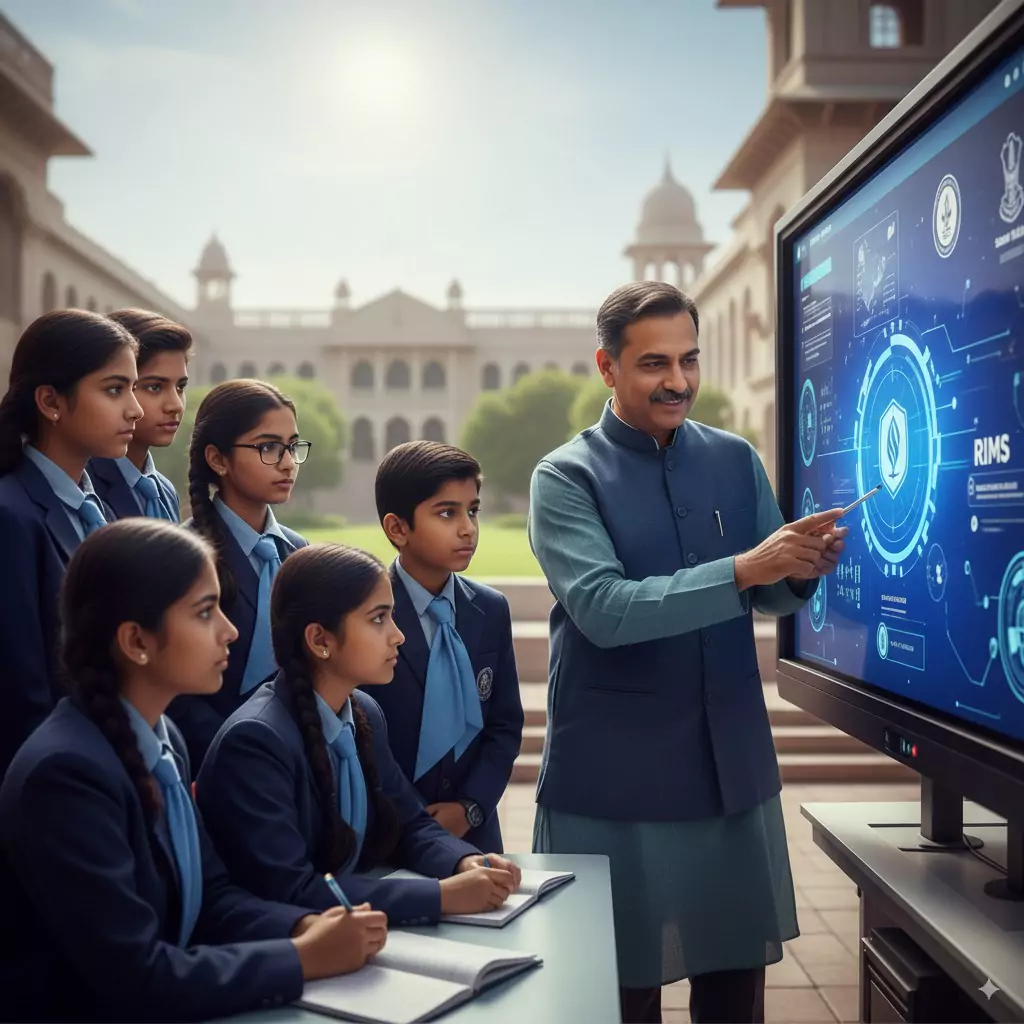
Firozabad — Glass City of India, 46% of India's bangles, Suhag Nagari. SainikGuru offers AISSEE coaching with Intelligence training, real mocks. UP quota. April start.
Question 1 of 5
We provide comprehensive coaching with proven methodologies and expert faculty to ensure your success in Sainik School entrance exams.
Take free mock tests and get detailed solutions. Know exactly where you stand!
Complete practice tests with real exam patterns and previous year question papers.
Step-by-step explanations with performance analysis and common mistake alerts.
World-class online education with expert faculty
Daily interactive sessions
Direct doubt clearance
Digital resources
Regular practice tests
Exam environment
State-of-the-art facilities for students
Quiet learning spaces
Nutritious meals
24/7 security & CCTV
Recreation areas
Round-the-clock support
Find answers to common questions about our coaching programs
Firozabad makes 46% of India's bangles.
Not a regional monopoly. Nearly half of every glass bangle bought anywhere in India comes from this one city. Over 4,000 manufacturing units. Families where glass has been worked for generations. Women in homes straightening, joining, cutting, and decorating bangles while the city's factories blow and shape the glass.
The city's name comes from Firoz Shah, an army commander under Akbar. In 1566, Akbar sent him to this area to collect taxes and make it a cantonment. The older city nearby - Chandwar - was the actual historical site. At Chandwar, according to some accounts, the decisive battle happened in 1194 when Muhammad of Ghor defeated Jaichand, the last powerful ruler of the Gahadavala dynasty. The Chandwar battle may have been the moment when medieval north India's political balance shifted irrevocably toward the Delhi Sultanate.
Firozabad today: 70% of India's unorganised glass sector production. Chandeliers, perfume bottles, laboratory glassware, automotive glass, vases. All from here.
The city ranked first in India's National Clean Air City assessment in 2024 (Category 2 cities). A glass city that cleaned its air.
44 kilometres from Agra. 40 km from the Taj Mahal. Population 2.5 million. Literacy 74.6%.
One District One Product: glassware.
UP state quota. Firozabad children compete within UP only. Industrial commercial background and proximity to Agra give children here stronger academic awareness than remote UP districts.
Pattern recognition: 16-week arc from April - 70-80%. October: 55-65%.
The glass and bangle industry creates pattern-cognition instincts from childhood. Children who grow up watching artisans create symmetrical patterns in glass bangles - identifying repeating motifs, understanding how shapes transform under heat - have a modest but real visual pattern recognition head start. Same as Ziro's weavers, Khurja's potters. The effect shows in weeks 1-4 of training.
Number series: Commercial glass industry creates strong arithmetic culture - costing, quantity management, production calculations. AISSEE ↗ trap: calculation replacing recognition. April practice.
Analogies: Hindi dominant (97%). Strong commercial vocabulary. Verbal analogy: 66-73% without training. Numerical and logical: six weeks each. Combined: +8-12 marks.
Spatial reasoning: Flat Yamuna plain near Agra. First-mock accuracy: 18-25%. April training: 63-70%. October: 45-55%.
Firozabad as Glass City / Suhag Nagari - specifically testable AISSEE economic geography on India's One District One Product programme and industrial geography.
Battle of Chandwar (1194) - Jaichand's defeat: specifically testable AISSEE medieval history - this battle is considered one of the key events that ended Rajput resistance to Delhi Sultanate.
Chandwar and Agra region: part of Braj cultural region, Yamuna river geography, proximity to Taj Mahal and Agra heritage.
Gap areas: defence organisation, constitutional articles, science GK. Systematic coverage from April adds 10-15 marks.
Eight students. One specialist per section. Weekly mocks. Real format. Section-wise diagnosis. October conversation. OMR from day one. Medical round throughout.
Class 6 - Age 10-12. March 31 cutoff. Class 9 - Age 13-15. March 31 cutoff. Check now.
2,362 sq km, 5 tehsils. Shikohabad, Jasrana, Tundla - online batch serves all tehsils equally.
Families compare notes - some checking Sainik school coaching in Telangana fees - because when preparation works, the glass colour stops mattering.
April: glass-craft pattern recognition head start amplified, flat-terrain spatial gap closed, Industrial GK depth activated. January - prepared.
October: week 10, spatial incomplete. January first.
Firozabad glass is shaped under heat, with precision, over time. Rushing the cooling cracks it. AISSEE preparation works the same way - the full arc from April. Don't rush January.
Reach SainikGuru at sainikguru.com - fill the form. Same-day callback.
Get in touch with us for admissions, course information, and any other queries related to Sainik School coaching in Firozabad.
Live Classes 4:30 PM – 6:30 PM • AISSEE, RIMC, RMS • All Cities of India