Welcome to Sainik Guru
Sign in to access mock tests, track your progress, and more
By signing in, you agree to our Terms and Privacy Policy

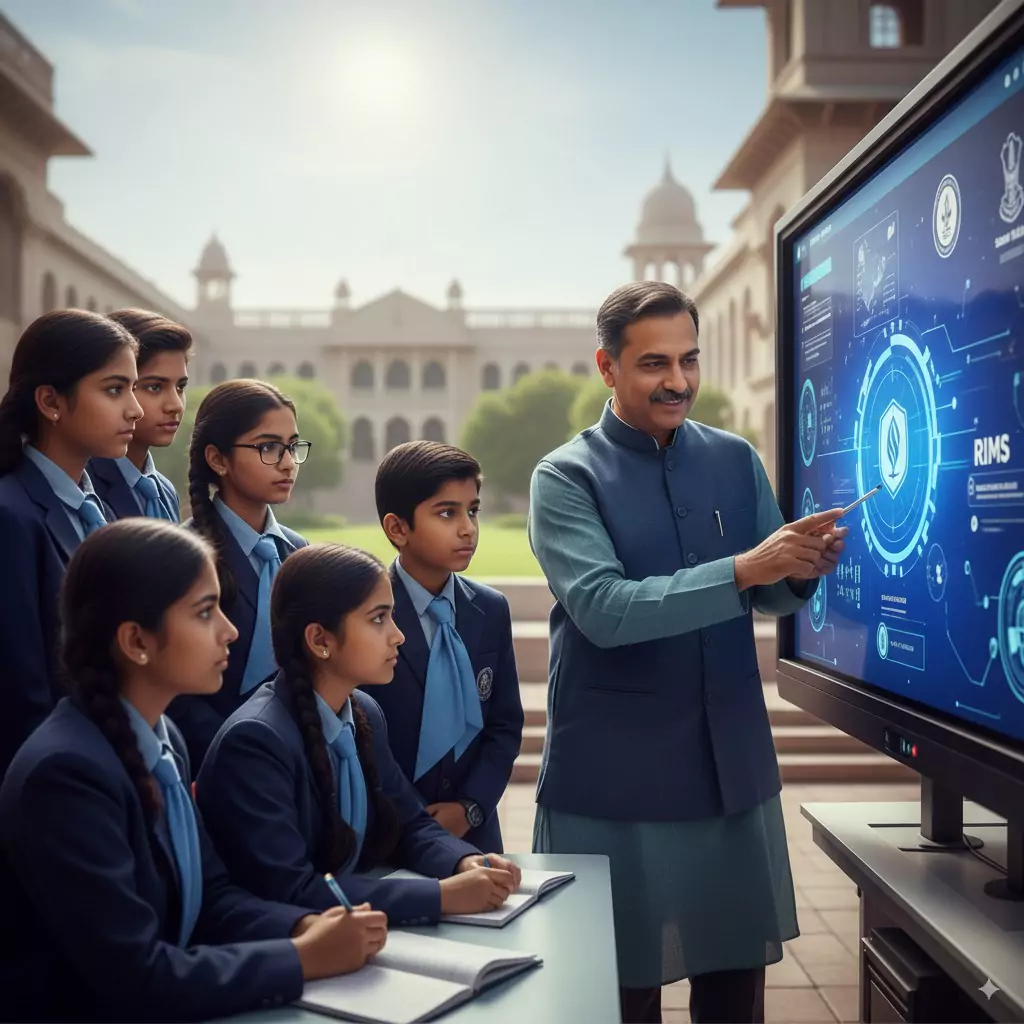
The Pandavas prepared here before Kurukshetra. Your child needs the same — right preparation before January. SainikGuru's AISSEE coaching. Jind, Haryana.
Question 1 of 5
We provide comprehensive coaching with proven methodologies and expert faculty to ensure your success in Sainik School entrance exams.
Take free mock tests and get detailed solutions. Know exactly where you stand!
Complete practice tests with real exam patterns and previous year question papers.
Step-by-step explanations with performance analysis and common mistake alerts.
World-class online education with expert faculty
Daily interactive sessions
Direct doubt clearance
Digital resources
Regular practice tests
Exam environment
State-of-the-art facilities for students
Quiet learning spaces
Nutritious meals
24/7 security & CCTV
Recreation areas
Round-the-clock support
Find answers to common questions about our coaching programs
The Pandavas stopped here before the Mahabharata war.
According to local tradition, they invoked Jaanti Devi - the goddess of victory - at this site before facing the Kauravas at Kurukshetra. The city that grew around this tirtha became Jaintapuri, then Jayantpuri, then Jind.
Pre-Harappan pottery recovered from villages across this district. Mauryan archaeological remains. The first Sikh kingdom - Raja Gajpat Singh captured this territory from Afghan invaders in 1763 and made Jind his capital in 1776. Heart of Haryana. One of the original seven districts when Haryana was created in 1966.
A city that has always been a gathering point before something consequential.
Families here now gathering toward AISSEE ↗ - toward Sainik Schools, toward defence careers for their children - are doing what Jind has always done. Preparing for something important.
The question is whether the preparation matches the task.
Jind's educational culture is solid. Haryanvi Jat families take schooling seriously. Private tuition is common. Hard work is standard.
And the Intelligence section still catches most children cold.
Not because they didn't work hard. Because the Intelligence section doesn't test what school teaches. It tests pattern cognition - a specific cluster of mental skills that school never formally addresses. Anywhere. In any district. In any state.
Jind children who start AISSEE preparation in April and work specifically on Intelligence have a genuinely different January than Jind children who do school revision and hope for the best.
Everything in the Intelligence section is, at base, pattern recognition.
Number series: recognise what type of series this is. Analogies: recognise what type of relationship exists. Spatial reasoning: recognise what transformation rule applies.
The question for families: how does a child build pattern recognition as a skill?
Not through more school study. Through specific, repeated exposure to the patterns that AISSEE uses - in increasing difficulty, under timed conditions, with feedback after each attempt.
A child who has encountered 300 pattern recognition problems between April and January has built a mental library of AISSEE patterns. When they see a new problem in January, they're not reasoning from scratch - they're matching to a pattern they've seen before. Fifteen seconds. Move on.
A child who hasn't built this library reasons from scratch every time. Forty-five seconds. Sometimes right. Sometimes not.
The gap in marks - typically 15-22 across the Intelligence section - determines selections.
Jind children who are strong at Maths can solve number series problems. The issue isn't whether they can solve them. It's whether they can solve them in 45 seconds.
A methodical approach - write out differences, check if second differences are constant, verify with the next term - takes 90 seconds. AISSEE gives 45.
Speed comes from type recognition. A child who has seen a "differences form an AP" series 40 times will look at 3, 6, 11, 18, 27 and know immediately: differences are 3, 5, 7, 9 - so the next difference is 11, answer is 38. Under ten seconds.
This is not a Maths improvement. It's a pattern library. It builds between April and October. It doesn't build between October and January.
Jind's Haryanvi-Hindi medium background is genuinely advantageous for verbal analogies. Strong mother-tongue vocabulary. Relationship identification in familiar language domains. This advantage is real - it typically produces 70-80% accuracy on verbal analogies without specific training.
Numerical analogies don't benefit from this. 4 : 64 :: 5 : 125 requires recognising "cubes" as the relationship - not calculating, not using vocabulary. Pure pattern recognition. Needs specific numerical analogy practice.
Logical analogies - figure transformations, rule application to shapes - benefit from neither language strength nor Maths strength. They need their own training category. Children who haven't specifically practised these often score 20-30% on logical analogies regardless of school performance.
Haryana's agricultural belt produces children with strong practical spatial intelligence. Farmers, mechanics, builders - spatial reasoning is embedded in rural work.
But AISSEE spatial reasoning tests a specific format: mental rotation, cube construction from flat nets, mirror images. These are different from practical spatial work. And the timed format - 45 seconds per question - is different from the unhurried spatial reasoning of everyday tasks.
The good news: children from agricultural backgrounds who get specific AISSEE spatial training often improve faster than urban children. The underlying spatial capacity is there. The AISSEE format is what needs to be learned.
Six weeks of dedicated spatial practice: most Jind children move from 20-25% accuracy to 65-75%. This improvement is consistent. It requires starting in April.
Central Haryana has strong political awareness. Jind families follow national events, electoral politics, policy developments. This transfers directly to parts of AISSEE GK.
What specifically helps: awareness of government structure, major national events, broad geography.
What specifically needs targeted coverage: defence organisation details (which command where, rank structures, famous operations); constitutional specifics at the article level; science GK as static facts rather than concepts. Weekly mock testing after April reveals exactly which GK sub-areas each child is weak on. Those get covered specifically.
Targeted GK preparation adds 10-15 marks over general awareness for Jind children. In a competitive Haryana state quota field, that's decisive.
English: 84% of Jind's population speaks Haryanvi as first language. English comprehension under strict time pressure - short dense passages, precise inference required, "almost correct" options designed to trap - is the section where marks most consistently disappear for Haryanvi-medium children without specific preparation. Eight months of AISSEE-format comprehension work from April is what closes this gap. Three months isn't enough.
Maths: The framing trap. AISSEE Maths problems use Class 5 concepts constructed to mislead confident students who apply standard methods quickly. Weekly mock practice from April builds the format-awareness that prevents these errors. Without it, strong Maths students still lose marks on questions they technically know how to solve.
Eight students per batch. One specialist per section. Weekly mocks from month one with real AISSEE format, real OMR, real time. Section-wise diagnosis after every mock - not a score, a map. Difficult parent conversations in October. OMR practice from day one. Medical round preparation throughout.
Kunjpura, Karnal. Rewari. State quota. Jind children compete within Haryana only.
Central Haryana location means Jind children have roughly equal road distance to both schools. Both are reachable, concrete goals. Preparation makes them achievable.
Class 6 - Age 10-12. March 31 cutoff. Class 9 - Age 13-15. March 31 cutoff.
Check the birth date now. One day past March 31 means a full year's wait.
Three sub-divisions. 306 villages. Narwana, Safidon, Julana - same teachers, same tests, same analysis as the city. Live classes, weekly mocks, WhatsApp doubts. Families comparing Sainik school coaching in Telangana fees find the same: when preparation works, the village stops mattering.
April: pattern library builds fully. English gap closes properly. January: child walks in prepared.
October: pattern library half-built. English gap stays. January arrives first.
Same paper. One child prepared. One child wasn't.
No guarantees. Full programme. Real mocks. Individual attention. Honest updates. Done properly.
After that - your child and the paper.
Sainikguru.com - fill the form. Same-day callback.
Get in touch with us for admissions, course information, and any other queries related to Sainik School coaching in Jind.
Live Classes 4:30 PM – 6:30 PM • AISSEE, RIMC, RMS • All Cities of India