Welcome to Sainik Guru
Sign in to access mock tests, track your progress, and more
By signing in, you agree to our Terms and Privacy Policy

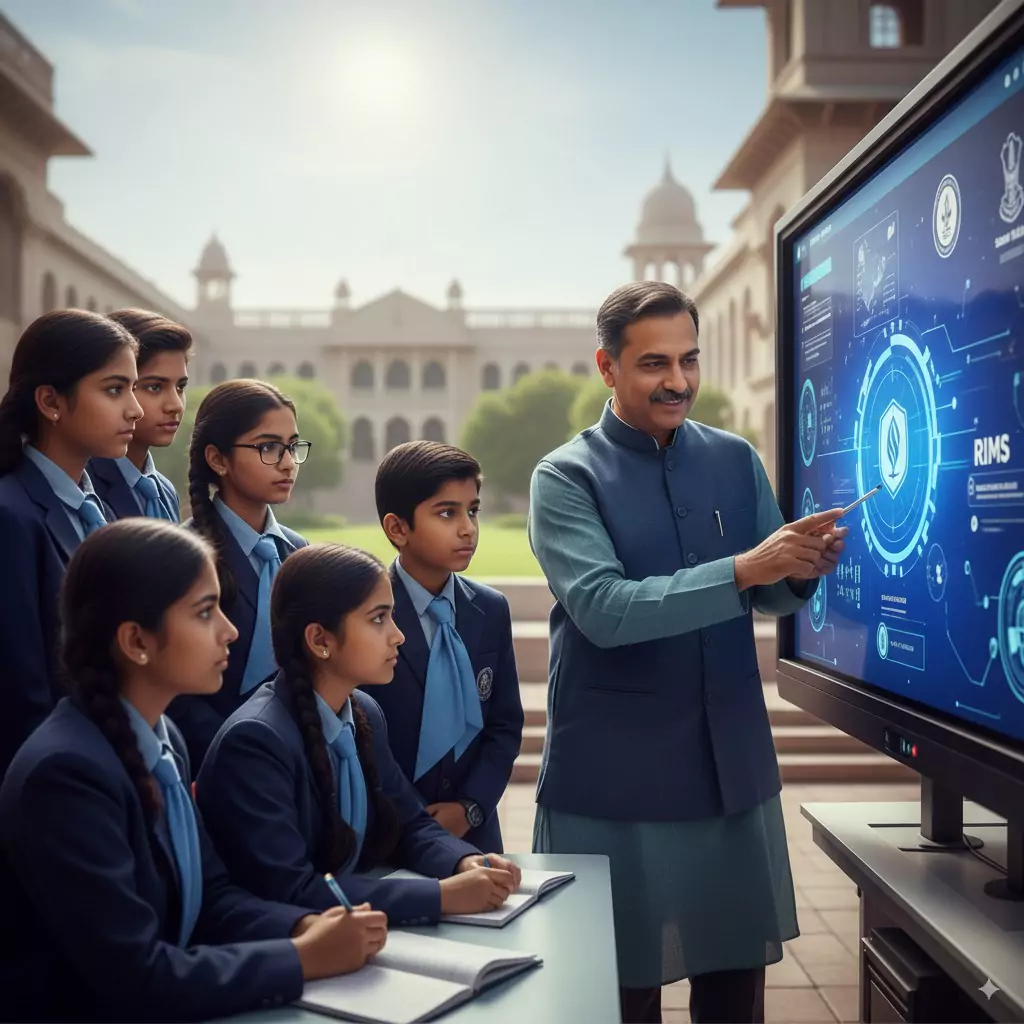
Every battle at Panipat was decided before the armies met — by preparation. AISSEE works the same way. SainikGuru. Panipat, Haryana. Start April.
Question 1 of 5
We provide comprehensive coaching with proven methodologies and expert faculty to ensure your success in Sainik School entrance exams.
Take free mock tests and get detailed solutions. Know exactly where you stand!
Complete practice tests with real exam patterns and previous year question papers.
Step-by-step explanations with performance analysis and common mistake alerts.
World-class online education with expert faculty
Daily interactive sessions
Direct doubt clearance
Digital resources
Regular practice tests
Exam environment
State-of-the-art facilities for students
Quiet learning spaces
Nutritious meals
24/7 security & CCTV
Recreation areas
Round-the-clock support
Find answers to common questions about our coaching programs
Three battles. Three turning points. One city.
1526 - Babur defeats Ibrahim Lodi. The Mughal Empire begins. 1556 - Akbar's forces face Hemu, the last Hindu emperor of Delhi. Hemu is struck by an arrow in the eye, falls unconscious, and his army collapses. Mughal rule consolidates. 1761 - Ahmad Shah Durrani defeats the Marathas. The Maratha expansion into north India ends permanently.
Three times, the political future of the subcontinent was decided on this ground.
Historians note something about all three battles: the outcome was determined not in the moment of combat but in the preparation before it. Babur's superior tactics. Akbar's mobility. Durrani's knowledge of Maratha weakness. Each victor had studied the field, understood the opponent, and prepared specifically for that confrontation.
Panipat - "City of Weavers," world capital of shoddy yarn and textile recycling, one of five villages the Pandavas demanded before Kurukshetra - carries this lesson in its ground.
AISSEE ↗ works the same way. The outcome is determined before the exam day. In April.
Panipat has strong schools. The textile economy has brought families from across India - UP, Rajasthan, Bihar, Punjab. A genuinely diverse educational culture. Literacy at 75.94%. Children accustomed to competitive environments.
And yet - the Intelligence section catches almost every Panipat child cold.
Not because they lack ability. Because no school anywhere in India teaches what the Intelligence section tests. Diversity of backgrounds, quality of schools, literacy rates - none of these variables predict Intelligence section performance. Specific training predicts it.
Pattern recognition - a different cognitive task from everything school does
Panipat's children come from academically competitive families. They're used to working hard and getting results. School rewards that approach.
Pattern recognition doesn't. It rewards a specific cognitive skill - rule derivation - that school never trains. The child who works hardest at school revision doesn't get better at deriving hidden rules from sequences. The child who specifically practises AISSEE pattern problems does.
The difference between these two children in January: typically 8-12 marks on pattern recognition alone. Starting in April gives 24 weeks to build the pattern library. Starting in October gives 12. The library built in 24 weeks is more consolidated, more instinctive, faster under pressure.
Number series - the problem with Panipat's maths-confident children
Panipat's diverse economy - textile industry, refinery, foundry - produces families where technical and mathematical thinking is valued. Children here are often stronger at Maths than in many Haryana districts.
This creates a specific number series risk.
Mathematically confident children try to solve number series through calculation. 4, 9, 16, 25, ? - they calculate the differences (5, 7, 9) and project the next difference (11) to get 36. This works. It takes 40-50 seconds.
AISSEE allows 45 seconds for the whole question including reading. The calculation approach barely fits for simple series. For complex series - mixed progressions, second-order APs, alternating rules - calculation doesn't fit at all.
The correct approach: look at the series and know its type from the first three terms. No calculation. Recognition. This builds through weekly exposure to all 15+ AISSEE series types from April. Not through better Maths.
Analogies - the multilingual advantage and its limits
Panipat's linguistic diversity - 47% Haryanvi, 42% Hindi, 6% Punjabi, significant Bhojpuri population - creates children with broad language exposure. This genuinely helps with verbal analogies. Relationship identification across familiar vocabulary is stronger for multilingual children.
But verbal analogies are one-third of the analogy section. Numerical analogies - 6 : 216 :: 5 : 125 (cubes) - require pattern recognition, not language. Logical/figure analogies - transformation rules applied to shapes - require visual reasoning, not language. Two-thirds of analogy marks are completely unaffected by language diversity.
Each analogy type needs separate targeted practice. Combined improvement from targeted analogy training: 8-12 marks over untrained performance.
Spatial reasoning - the blind spot even strong students have
Panipat's academic culture doesn't help here. No academic culture does.
Mental rotation. Cube nets. Mirror images. Paper folding. 3D figures and their 2D representations.
No school in India teaches these. No curriculum includes them. A child from Panipat's best English-medium CBSE ↗ school and a child from a government school in a village near Samalkha start from identical zero on spatial reasoning if neither has trained for it.
Children who receive six weeks of progressive spatial practice from April reach 60-70% accuracy on spatial questions. Children who don't reach 10-20%. On questions worth 10-15 marks in a 50-mark section, that gap is decisive.
Panipat's historical consciousness is genuinely unusual. Families here often know the three battles in some detail - the sequence, the combatants, the consequences. This historical awareness transfers directly to AISSEE GK's Indian history component.
Children who know that Babur used gunpowder artillery at the First Battle of Panipat - something most Indian children learn abstractly - know it viscerally here. That visceral familiarity accelerates retention.
What specifically helps: medieval and early modern Indian history, military campaigns, political geography of north India. These are tested in AISSEE GK, and Panipat children have a natural head start.
What still needs targeted coverage:
Constitutional specifics: Article numbers, constitutional bodies, fundamental rights in detail. School covers broadly. AISSEE tests specifically.
Defence organisation: Command headquarters, rank structures, famous modern operations. Historical military awareness doesn't automatically produce knowledge of current Indian defence structure.
Science GK: Inventors, discoveries, acronyms. Needs specific AISSEE GK coverage regardless of general awareness.
Systematic GK preparation from April - tested weekly - converts Panipat's historical advantage into marks and fills the gaps that historical awareness doesn't reach.
Panipat's linguistic diversity means English proficiency varies significantly within the district. Families from UP and Bihar often have strong Hindi but less English exposure. Haryanvi-medium families have limited English communication outside school. Punjabi-background families vary.
AISSEE English comprehension - short dense passages, precise inference, strict time - requires the same preparation regardless of linguistic background. The specific challenge: AISSEE's "almost correct" options are designed for children who read accurately but not precisely. For all of Panipat's linguistic backgrounds, precise English reading under time pressure is a skill that needs AISSEE-format practice.
Eight months from April: readable for most Panipat children. Three months from October: not enough for the inference precision AISSEE requires.
Panipat's technical industrial background produces confident Maths students. This is the specific AISSEE Maths risk.
AISSEE Maths questions are architected to produce wrong answers from children who apply standard methods quickly and confidently. The question is Class 5 level. The construction is designed for the child who reads fast and calculates first.
The protection: AISSEE-format mock practice from April. After 100 AISSEE Maths questions, the trap architectures become visible. The technically confident child slows appropriately on the constructed questions and navigates them correctly.
Eight students per batch. One specialist per section.
Weekly mocks from month one. Real AISSEE format. Real OMR. Real time. Section-wise diagnosis after every mock - which spatial type is still weak, which GK area needs coverage, whether Maths errors are conceptual or framing-based.
Honest parent conversation in October. OMR practice from day one. Medical round preparation throughout.
Sainik School Kunjpura is in Karnal - the district that directly borders Panipat to the north.
State quota - Panipat children compete within Haryana only. Their nearest Sainik School is one district away. Haryana also has Sainik School Rewari as a second option within the same state quota.
Preparation is what makes geographic proximity into actual selection.
Class 6 - Age 10-12. March 31 cutoff. Hard. Class 9 - Age 13-15. March 31 cutoff. Hard.
Check the birth date now. March 31 is absolute.
Samalkha, Israna, Bapoli, Madlauda - the online batch serves all tehsils equally. Same teachers. Same tests. Same breakdown after every mock.
Families from other states compare notes too - some checking Sainik school coaching in Telangana fees - because when preparation works, the tehsil name stops mattering.
April - eight months. Pattern library builds. Spatial training completes. GK systematically covered. January - child walks in prepared.
October - three months. Everything starts too late. January arrives first.
Same battlefield. One general prepared. One arrived hoping for the best.
No guaranteed selections. Full programme. Real mocks. Individual attention. Honest updates. Done properly.
Every battle at Panipat was decided by preparation before the armies met. AISSEE is the same.
After that - your child and the paper.
Reach SainikGuru at sainikguru.com - fill the form. Same-day callback on working days.
Get in touch with us for admissions, course information, and any other queries related to Sainik School coaching in Panipat.
Live Classes 4:30 PM – 6:30 PM • AISSEE, RIMC, RMS • All Cities of India