Welcome to Sainik Guru
Sign in to access mock tests, track your progress, and more
By signing in, you agree to our Terms and Privacy Policy

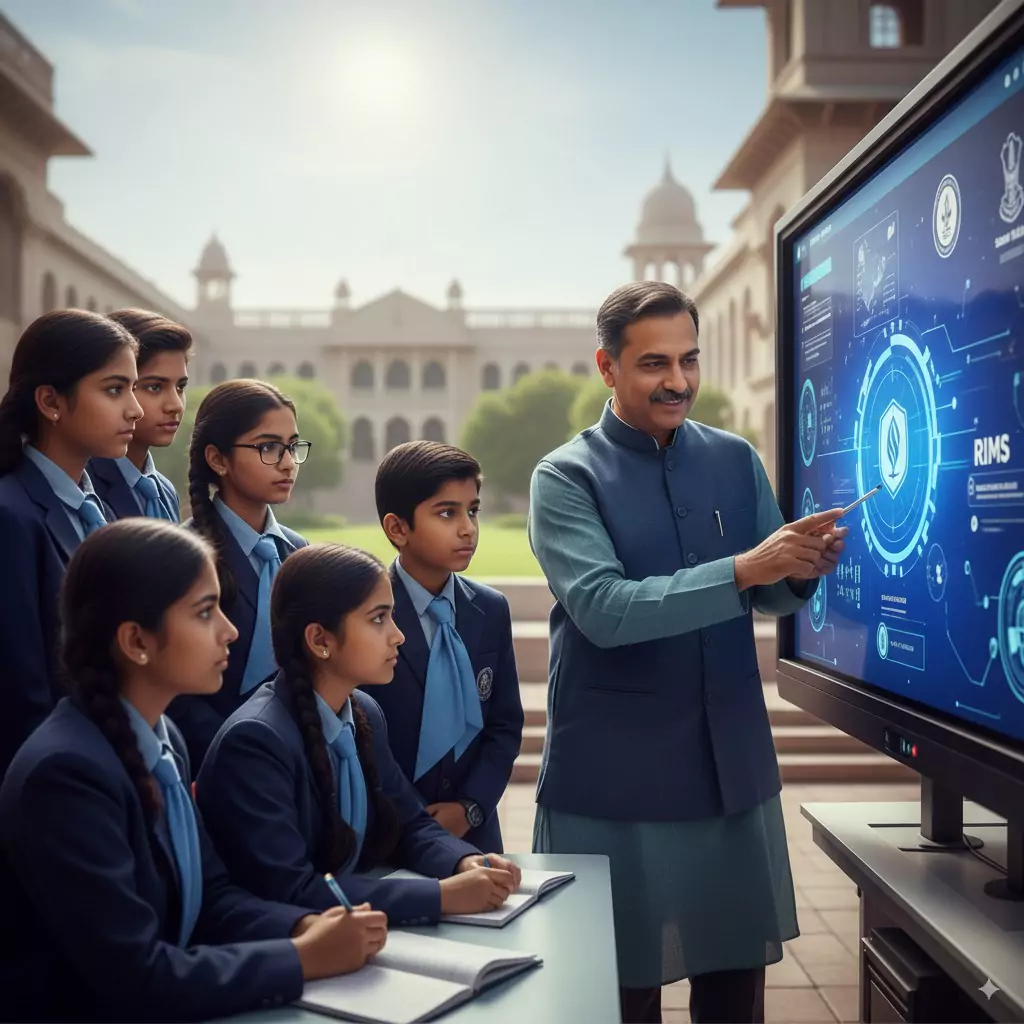
Satna — Cement City of India, Chitrakoot where Ram spent 11.5 years. India's largest limestone reserves. SainikGuru offers AISSEE coaching. MP state quota. April start.
Question 1 of 5
We provide comprehensive coaching with proven methodologies and expert faculty to ensure your success in Sainik School entrance exams.
Take free mock tests and get detailed solutions. Know exactly where you stand!
Complete practice tests with real exam patterns and previous year question papers.
Step-by-step explanations with performance analysis and common mistake alerts.
World-class online education with expert faculty
Daily interactive sessions
Direct doubt clearance
Digital resources
Regular practice tests
Exam environment
State-of-the-art facilities for students
Quiet learning spaces
Nutritious meals
24/7 security & CCTV
Recreation areas
Round-the-clock support
Find answers to common questions about our coaching programs
Chitrakoot is in Satna district.
The forest where Ram, Sita, and Lakshmana spent 11.5 of their 14 years in exile. Where Atri and Anusuya lived. Where the sage Valmiki meditated. One of Hinduism's most sacred pilgrimage destinations.
Satna also has India's largest limestone deposits. India's major cement companies - Birla Corporation, Prism Cement, UltraTech - all operate here. "Cement City of India." Maihar's Sharda Devi temple draws lakhs annually. Population 2.23 million. Literacy 73.79%. Adjacent to Sainik School Rewa's district.
MP has Sainik School Rewa. MP state quota. Satna families compete within MP only. Being in Rewa division - the same administrative division as Sainik School Rewa - makes Satna one of the most logistically close districts to the school.
AISSEE ↗ tests four sections. Intelligence is the one that no school addresses. Understanding why this is the case - and what specific training produces - is what this page is about.
Why school doesn't build Intelligence skills
School is built on rule transmission. A teacher transmits a rule. Students apply it. Assessment checks whether they applied it correctly.
AISSEE Intelligence requires rule discovery. A sequence exists. Nobody transmits the rule. The child must find it.
This is not a matter of intelligence level or school quality. It's a matter of cognitive training direction. School trains application. AISSEE tests discovery. They're opposites.
Children with excellent school performance score 20-25% on Intelligence without specific training - every year, across all districts, regardless of school quality.
Pattern recognition - what the training actually does
The training is systematic and specific. Here is the exact progression:
Single-rule phase (Weeks 1-4): The child learns to identify what changes between frames. They develop a mental checklist: orientation → size → element count → shading → shape → symmetry. Each session applies this checklist to 50-60 questions. By week 4, the checklist becomes automatic. Accuracy: 38-45%.
Compound-rule phase (Weeks 5-8): Two rules simultaneously. After identifying Rule 1, the child checks: "Is there variation I haven't explained?" If yes, find Rule 2. This double-check becomes a habit. Accuracy: 55-65%.
Speed phase (Weeks 9-12): AISSEE timing. 45-54 seconds per question average. The mental checklist must run in 15-20 seconds, leaving 25-30 for the answer. This speed develops through repetition under timed conditions.
Mock phase (Weeks 13-16): Full AISSEE Intelligence sections, OMR, section diagnosis. The child arrives at January knowing their weak areas - and having addressed them.
October start: Completes the single-rule phase by November, reaches middle of compound-rule phase by January. Accuracy: 55-60%.
Number series - the manufacturing district profile
Satna's cement and limestone industry creates technical arithmetic culture. Families connected to Birla Corporation, Prism Cement, and UltraTech produce children with strong quantitative backgrounds.
The AISSEE number series trap: the series aren't tested to see if children can calculate. They're tested to see if children can recognise series types under time pressure. Calculation is too slow.
Most critical example for technical-background children:
Series: 1, 1, 2, 3, 5, 8, 13
A calculating child: differences are 0, 1, 1, 2, 3, 5. The differences themselves follow the original pattern. This takes 40-60 seconds to spot. AISSEE allows 45.
A trained child: sees the first three numbers 1, 1, 2 and recognises Fibonacci immediately. Next: 8+13=21. Six seconds.
The Fibonacci series appears in AISSEE. So do 14 other types. All need to be recognised on sight. April practice builds this recognition. Four months of weekly encounter with each type.
Analogies and spatial reasoning
Analogies: Hindi-Bagheli bilingual background. Bagheli is a distinct dialect spoken in the Rewa-Satna belt. Strong relationship-identification vocabulary. Verbal analogy: 66-73% without training. Numerical and logical: 6 weeks each.
Spatial: Vindhya plateau with rocky terrain, Satna river valley. Moderate spatial baseline. First-mock accuracy: 25-32%. April training: 65-73%. October: 47-55%.
Chitrakoot (Ram's 11.5-year exile site): specifically testable AISSEE Ramayana geography - among the most consistently tested ancient India topics.
"Cement City of India" (Satna): India's industrial geography nicknames - testable.
Maihar Sharda Devi Temple: MP pilgrimage geography - testable.
India's largest limestone deposits: India's mineral resources - testable economic geography.
Eight students. One specialist per section. Weekly mocks. Section-wise diagnosis. October honest conversation. OMR from day one. Medical round throughout.
Class 6 - Age 10-12. March 31 cutoff. Class 9 - Age 13-15. March 31 cutoff.
Reach SainikGuru at sainikguru.com - fill the form. Same-day callback.
Get in touch with us for admissions, course information, and any other queries related to Sainik School coaching in Satna.
Satna, Madhya Pradesh, India
Live Classes 4:30 PM – 6:30 PM • AISSEE, RIMC, RMS • All Cities of India