Welcome to Sainik Guru
Sign in to access mock tests, track your progress, and more
By signing in, you agree to our Terms and Privacy Policy

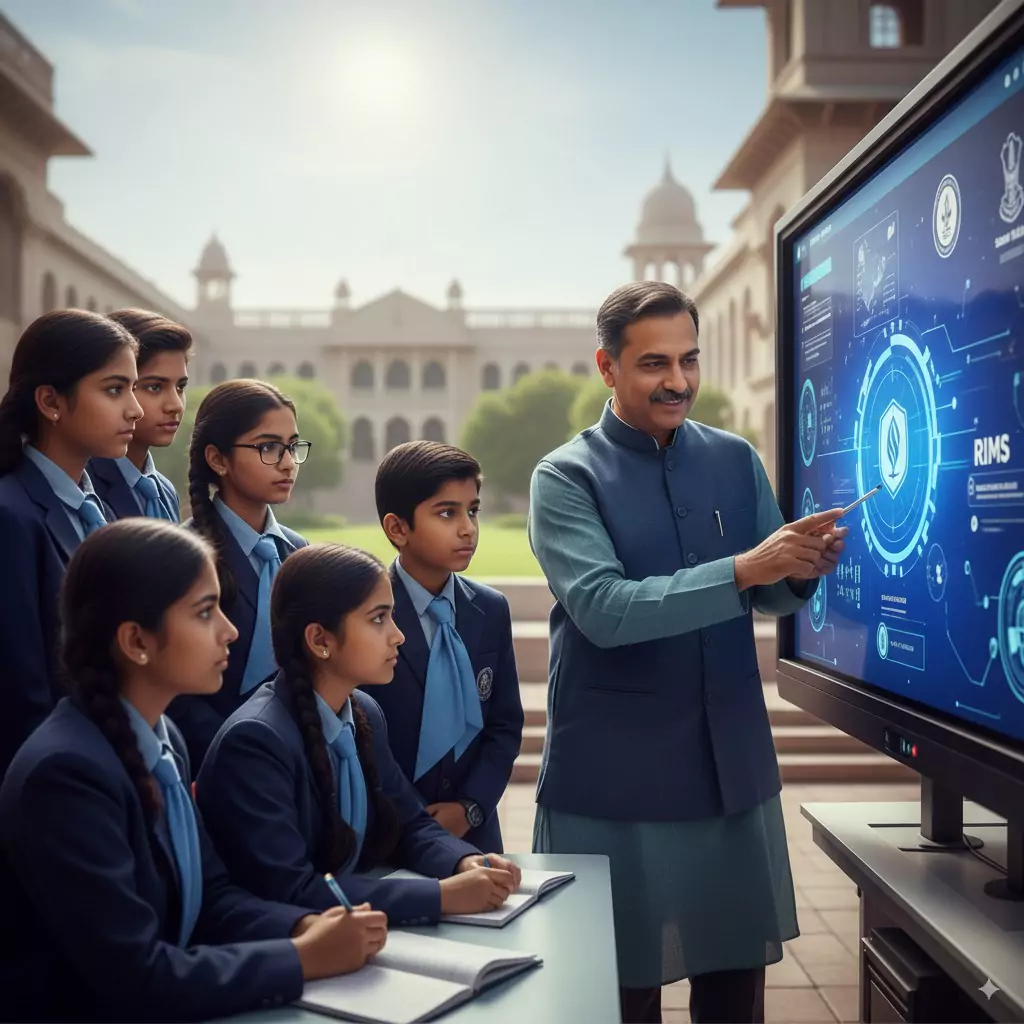
Sainik School Kunjpura is next door. SainikGuru prepares Thanesar children for AISSEE — Intelligence training, real weekly mocks, small batches. April start.
Question 1 of 5
We provide comprehensive coaching with proven methodologies and expert faculty to ensure your success in Sainik School entrance exams.
Take free mock tests and get detailed solutions. Know exactly where you stand!
Complete practice tests with real exam patterns and previous year question papers.
Step-by-step explanations with performance analysis and common mistake alerts.
World-class online education with expert faculty
Daily interactive sessions
Direct doubt clearance
Digital resources
Regular practice tests
Exam environment
State-of-the-art facilities for students
Quiet learning spaces
Nutritious meals
24/7 security & CCTV
Recreation areas
Round-the-clock support
Find answers to common questions about our coaching programs
Thanesar has 350+ pilgrimage sites in its surrounding district. Literacy at 85.73%. Kurukshetra University. NIT Kurukshetra. The urban area merges with Kurukshetra.
A city of genuine intellectual and historical weight. And children here are still losing AISSEE ↗ on the Intelligence section - for exactly the same reason children lose it everywhere else in India.
The instruction for this page is to write more about the topic. So here it is - everything Thanesar families need to understand about what AISSEE tests and what "preparation" actually means.
What AISSEE is
NTA conducts AISSEE every January. Class 6 (age 10-12, March 31 cutoff) and Class 9 (age 13-15, March 31 cutoff). Class 6 tests Maths, English, GK, and Intelligence. Class 9 adds Science and Social Studies.
State quota - Thanesar children compete within Haryana only for reserved seats. Both Sainik School Kunjpura in Karnal (adjacent district) and Sainik School Rewari are within the Haryana pool. The structural advantage is real. Preparation converts it.
What the Intelligence section actually is
Forty to fifty marks. Four sub-types. None appear in any school curriculum anywhere in India. High literacy in Thanesar doesn't change this. NIT Kurukshetra's proximity doesn't change this. The section is equally unfamiliar to every child who hasn't specifically trained for it.
Everything in the Intelligence section reduces to pattern recognition. This makes it the foundational skill - the one that, when built, makes every other Intelligence sub-type easier.
What pattern recognition tests: a sequence of figures or numbers where each element follows a hidden rule. The task is to derive the rule from the sequence and predict the next element.
This is cognitively different from what school teaches. School provides rules and asks students to apply them. Pattern recognition withholds the rule and asks students to discover it. The cognitive direction is reversed.
Children who've never practised this - which is every child who hasn't done AISSEE-specific preparation - encounter a blank moment when they see pattern recognition questions. The sequence looks arbitrary. The rule isn't visible. Under time pressure, they guess.
The training sequence: Week 1-2, introduce simple patterns (one-rule visual sequences, single-step number patterns). Child encounters unfamiliarity and begins pattern-spotting instincts. Week 3-5, introduce compound patterns (two-rule visual sequences, second-order number progressions). Child begins to see structure. Week 6-8, timed practice under AISSEE conditions. Speed builds. Week 9-16, full AISSEE format with increasing difficulty and section-wise mocks. By week 16, most children solve pattern recognition questions in 12-18 seconds with 75%+ accuracy.
Children who start in October reach week 8 by January. Week-8 performance is not week-16 performance.
Thanesar's educated families produce children with good Maths foundations. This matters for number series - but not in the way families think.
The Maths isn't hard. The question 4, 9, 16, 25, ? requires recognising "perfect squares." The question 2, 6, 18, 54, ? requires recognising "geometric progression, ratio 3." The question 3, 5, 9, 15, 23, ? requires recognising "differences are 2, 4, 6, 8 - an arithmetic progression of differences."
None of this requires advanced Maths. It requires instant recognition of series types that AISSEE uses repeatedly. There are approximately 15 distinct series types that appear consistently in AISSEE. A child who has encountered each type 20+ times between April and January recognises them on sight. A child who encounters them for the first time in January reasons from scratch - which takes 60-90 seconds per question. AISSEE allows 45.
The solution: weekly number series practice from April, covering all 15+ types systematically. Not harder Maths study. Type-recognition training.
Thanesar's high literacy (85.73%) is a specific advantage for one of three analogy types.
Verbal analogies test relationship identification in language. Clock : Time :: Thermometer : Temperature. School : Student :: Hospital : Patient. Strong vocabulary and conceptual awareness - which Thanesar's educated families provide - help here. Typically 70-75% accuracy without specific training for high-literacy children.
Numerical analogies test number relationship patterns. 5 : 25 :: 6 : 36 (squares). 2 : 8 :: 3 : 27 (cubes). 4 : 2 :: 16 : 4 (square roots). Requires recognising the mathematical relationship type, not calculating. Strong Maths helps identify the operation involved, but the pattern-recognition direction of the question is different from school Maths. Specific training adds 3-5 marks over strong-Maths baseline.
Logical/figure analogies test transformation rules applied to shapes. A figure on the left transforms according to a rule; identify how a different figure transforms by the same rule. Neither language strength nor Maths strength helps here. This is visual-spatial pattern recognition in relationship form. Children who haven't specifically practised figure analogies score 20-30% regardless of academic background. Targeted practice moves this to 65-75%.
Combined: targeted analogy training for all three types adds 8-12 marks for Thanesar children over their natural high-literacy baseline.
No school in Kurukshetra covers spatial reasoning. Not Kurukshetra University's affiliated schools. Not NIT Kurukshetra's feeder schools. Not any school in any state in India.
Mental rotation - taking a 2D figure and identifying what it looks like when rotated 90°, 180°, or 270°. Cube nets - identifying which 3D cube can be assembled from a given flat pattern. Mirror images - identifying the correct mirror reflection of a figure. Paper folding - identifying the hole pattern when folded paper is punched and unfolded.
Children encounter these for the first time in January unless someone specifically trained them. The unfamiliarity is complete. Even children who are outstanding at geometry in school - who understand angles, symmetry, and transformations - score 15-20% on spatial AISSEE questions without specific spatial training.
The mechanism of spatial training: Week 1-2, simple rotations of symmetric figures. Week 3-4, asymmetric figure rotations. Week 5-6, cube net construction. Week 7-8, mirror images and paper folding under timed conditions. Week 9+, full AISSEE-format spatial practice in mock conditions.
Improvement trajectory: consistent across districts and school types. Most children move from 15-20% to 60-70% accuracy in 6-8 weeks. The condition is starting in April.
For children who start in October: 6 weeks of spatial training completes by late November. One month of consolidation before January. This produces 40-50% accuracy - meaningfully better than zero, but not competitive.
For children who start in April: 6 weeks of training completes in May. Four months of consolidation and continued practice. 65-75% accuracy in January. Competitive.
The difference - 20-25 marks on spatial reasoning questions alone - frequently determines selection.
Kurukshetra district's GK position is unusual. Children who've grown up in Thanesar have direct experiential awareness of Indian history, mythology, and religious geography at a depth that most Indian children access only through textbooks.
Mahabharata battlefield geography. The significance of Brahma Sarovar. The pilgrim tank circuits. The connection between Sthaneshwar and the Bhagavad Gita setting. The political history of the Vardhana dynasty. The Ghazni invasions and their targets.
For AISSEE GK's Indian history and cultural geography components, this is a genuine advantage - not just textbook knowledge but lived contextual awareness. This typically translates to 5-8 marks above average on the history-geography GK component.
Gap areas requiring targeted coverage: defence organisation specifics (headquarters, ranks, modern operations), constitutional article numbers, science GK as static facts. Systematic coverage of these from April - tested weekly - adds the remaining marks.
English: 85.73% literacy means English foundations are stronger than most Haryana districts. AISSEE comprehension still requires specific format practice - "almost correct" options, timed inference under pressure. Thanesar children typically reach competitive English performance faster than average with targeted practice.
Maths: Class 5 level concepts, AISSEE architectural misleads. Confident Maths students are specifically at risk. Weekly mock practice from April builds the format-awareness that navigates constructions correctly.
Eight students per batch. One specialist per section.
Weekly mocks from month one. Real AISSEE format. Real OMR. Real time. Section-wise diagnosis after every mock - not a score but a map.
October: honest parent conversation. OMR practice from day one. Medical round preparation throughout.
Class 6 - Age 10-12. March 31 cutoff. Class 9 - Age 13-15. March 31 cutoff.
Check the birth date now. March 31 is absolute.
Pehowa, Shahbad, Ladwa - the online batch serves all four sub-divisions of Kurukshetra district equally. Same teachers. Same tests. Same diagnosis.
Families from other states compare notes - some checking Sainik school coaching in Telangana fees - because when preparation works, the city name stops mattering.
April - eight months. Spatial training completes properly. Pattern library builds to confident level. January - child walks in prepared.
October - three months. Everything starts but only half-finishes. January arrives mid-process.
Same Kurukshetra ground. One child prepared. One child wasn't.
No guaranteed selections. Full programme. Real mocks. Individual attention. Honest updates.
Harsha built an empire starting at sixteen - from this city. He didn't start without preparation. He started with his father's kingdom, his family's political network, and his own extraordinary capacity - and he worked with all of it specifically.
AISSEE asks something simpler. Specific preparation. Starting in April.
After that - your child and the paper.
Reach SainikGuru at sainikguru.com - fill the form. Same-day callback on working days.
Get in touch with us for admissions, course information, and any other queries related to Sainik School coaching in Thanesar.
Thanesar, Haryana, India
Live Classes 4:30 PM – 6:30 PM • AISSEE, RIMC, RMS • All Cities of India