Welcome to Sainik Guru
Sign in to access mock tests, track your progress, and more
By signing in, you agree to our Terms and Privacy Policy

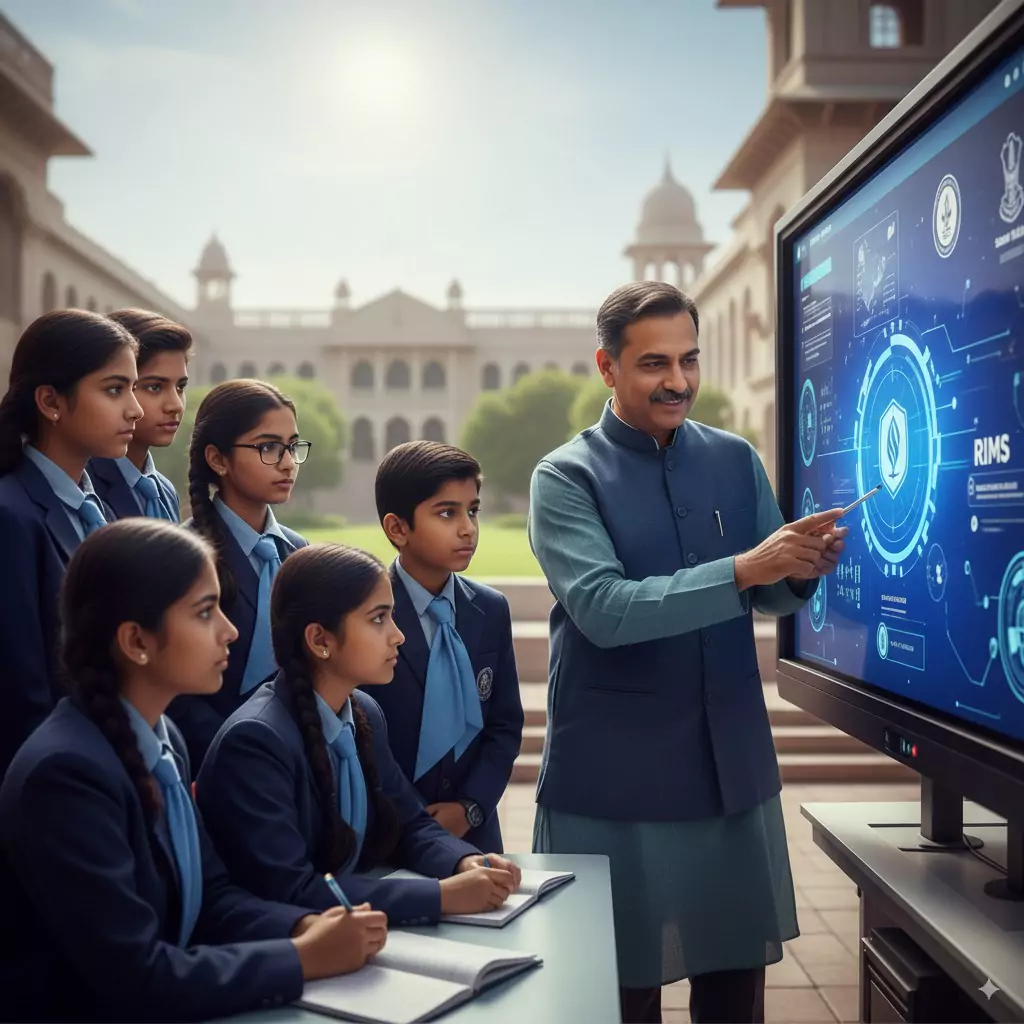
Prepare for Sainik School admission with trusted AISSEE coaching classes in Darbhanga Bihar. Online & offline batches available for Class 6 and 9 students.
Question 1 of 5
We provide comprehensive coaching with proven methodologies and expert faculty to ensure your success in Sainik School entrance exams.
Take free mock tests and get detailed solutions. Know exactly where you stand!
Complete practice tests with real exam patterns and previous year question papers.
Step-by-step explanations with performance analysis and common mistake alerts.
World-class online education with expert faculty
Daily interactive sessions
Direct doubt clearance
Digital resources
Regular practice tests
Exam environment
State-of-the-art facilities for students
Quiet learning spaces
Nutritious meals
24/7 security & CCTV
Recreation areas
Round-the-clock support
Find answers to common questions about our coaching programs
Madhubani painting didn't start in a studio.
It started on mud walls. On floors at weddings. On the outer walls of homes during festivals. Women painted them to mark sacred occasions - the paintings were ritual, not decorative. Geometric patterns, stylised nature, mythology. Done without perspective or shadow. Every figure outline filled with pattern and colour.
In the 1960s, there was a drought in the Mithila region. An NGO began paying women to paint the same patterns on paper. Madhubani art entered the market. A traditional ritual became a global art form. In 1982, the Indian government granted it GI recognition. Now it's sold across India and exported internationally.
It began in Darbhanga district. The Heart of Mithila.
Mithila is ancient. The Videha Kingdom - where Sita was born, where King Janaka ruled, where Ashtavakra debated in the royal court - was centred here. Vidyapati, the 14th-15th century Maithili poet whose songs are still sung at religious festivals across Bihar and beyond, was born in this region.
Maithili - the language of Darbhanga - is one of the 22 scheduled languages of India's Constitution, listed in the 8th Schedule. It's the language of one of India's classical literary traditions.
The Darbhanga Raj was one of British India's wealthiest zamindari estates. Its Maharajas funded Sanskrit scholarship, Dhrupad music (one of India's oldest classical forms), and academic institutions across north Bihar.
Makhana - fox nuts, lotus seeds - Darbhanga and Madhubani are India's largest producers. GI-tagged product.
Population 3.92 million. Literacy 68.87%.
Bihar has Sainik School Nalanda at Rajgir. Bihar state quota. Darbhanga families compete within Bihar only.
Mithila's extraordinary cultural depth creates specific AISSEE ↗ GK advantages. Intelligence still requires specific training.
Pattern recognition: 16-week arc from April - 70-80%. October: 55-65%.
The Madhubani painting tradition creates unusually strong visual pattern-cognition instincts in Darbhanga children. Geometric patterns, repeated motifs, sequence-building across a canvas - these are cognitive skills that directly transfer to AISSEE pattern recognition training. Among the strongest craft-based pattern recognition advantages we see - stronger than silk weaving, pottery, or basket-making traditions.
Children from Madhubani-painting families show 30-40% first-mock pattern recognition accuracy versus 20-25% for non-craft families. April training converts this to 72-82%.
Number series: Agricultural and commercial Mithila economy. Makhana farming - seasonal calculation. AISSEE trap: calculation replacing recognition. April practice.
Analogies: Maithili-Hindi bilingual. Mithila's classical literary tradition - Vidyapati, Sanskrit scholarship - creates deep conceptual vocabulary and relationship-identification instincts. Verbal analogy: 69-76% without training - among the highest natural baselines in Bihar. Numerical and logical: six weeks each. Combined: +8-12 marks above the literary Maithili baseline.
Spatial reasoning: Flat North Bihar plains. First-mock accuracy: 18-25%. April training: 63-70%. October: 45-55%.
Madhubani/Mithila painting: GI-tagged, UNESCO consideration, geometric folk art, ritual origin - testable art and craft GK.
Maithili language: 8th Schedule of the Indian Constitution, classical literary tradition, Vidyapati's compositions - testable constitutional language and cultural GK.
Makhana (fox nuts): GI-tagged product, Bihar's agricultural geography, lotus seed cultivation - testable economic geography.
Sita's birthplace (Sitamarhi, nearby): Ramayana geography, Janaka's kingdom, Videha - testable ancient history.
Dhrupad music: one of India's oldest classical music traditions, patronised by Darbhanga Raj - testable cultural heritage GK.
Gap areas: defence organisation, constitutional articles, science GK. Systematic coverage from April adds 10-15 marks.
Eight students. One specialist per section. Weekly mocks. Real format. Section-wise diagnosis. October conversation. OMR from day one. Medical round throughout.
Class 6 - Age 10-12. March 31 cutoff. Class 9 - Age 13-15. March 31 cutoff. Check now.
2,279 sq km, 3 sub-divisions. New Darbhanga Airport (inaugurated 2021, direct flights to Delhi, Kolkata, Hyderabad) improved connectivity. The online batch serves all 18 blocks equally regardless.
Families compare notes - some checking Sainik school coaching in Telangana fees - because when preparation works, the airport connectivity stops mattering.
April: Madhubani pattern recognition advantage fully converted (72-82%), Maithili literary verbal advantage amplified, cultural GK systematically activated. January - prepared.
October: pattern advantage underused, week 10 only. January first.
The women of Mithila painted on mud walls for centuries before anyone outside the region noticed. The art didn't wait for recognition. AISSEE preparation doesn't wait for October. Start in April.
Reach SainikGuru at sainikguru.com - fill the form. Same-day callback.
Get in touch with us for admissions, course information, and any other queries related to Sainik School coaching in Darbhanga.
Live Classes 4:30 PM – 6:30 PM • AISSEE, RIMC, RMS • All Cities of India