Welcome to Sainik Guru
Sign in to access mock tests, track your progress, and more
By signing in, you agree to our Terms and Privacy Policy

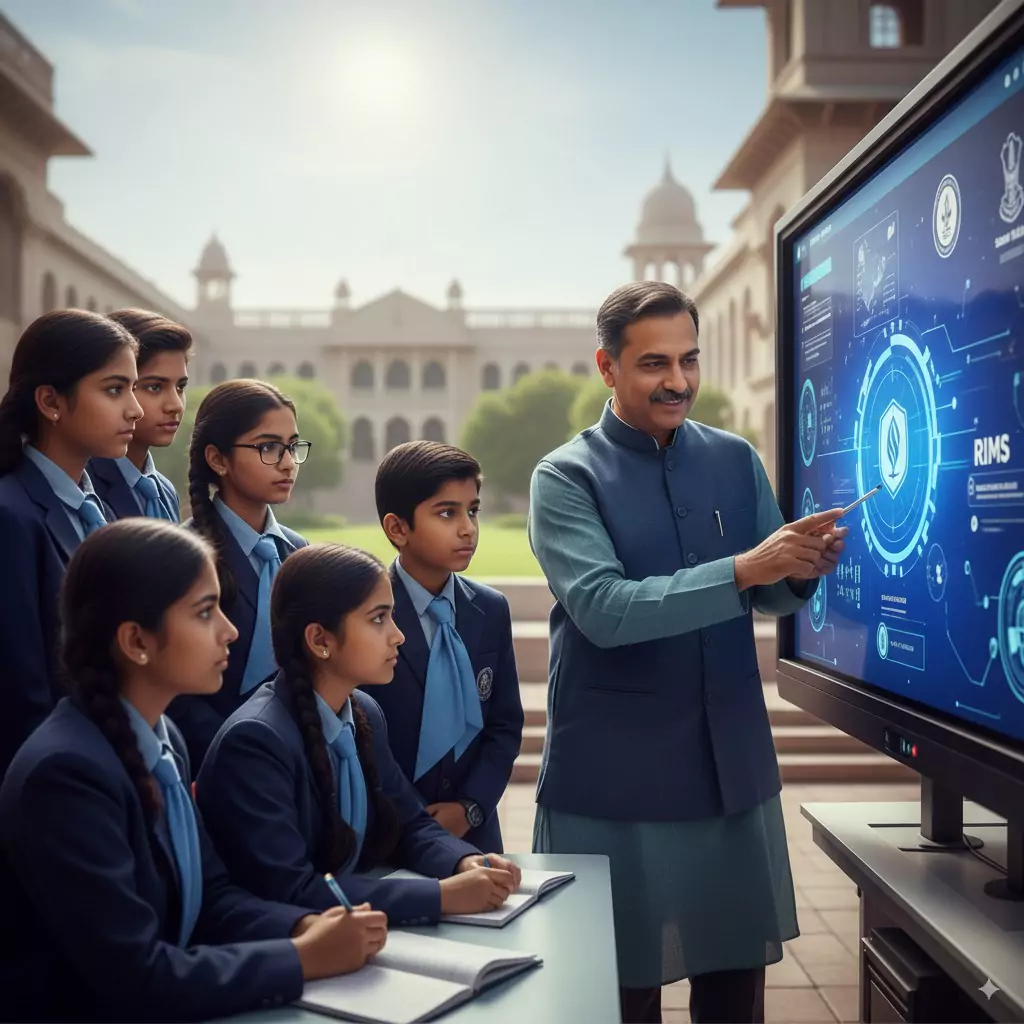
Khanna has Asia's largest grain market — 51 acres, running since 1967. Grand Trunk Road. SainikGuru offers AISSEE coaching — Intelligence training, real mocks. Punjab quota. April start.
Question 1 of 5
We provide comprehensive coaching with proven methodologies and expert faculty to ensure your success in Sainik School entrance exams.
Take free mock tests and get detailed solutions. Know exactly where you stand!
Complete practice tests with real exam patterns and previous year question papers.
Step-by-step explanations with performance analysis and common mistake alerts.
World-class online education with expert faculty
Daily interactive sessions
Direct doubt clearance
Digital resources
Regular practice tests
Exam environment
State-of-the-art facilities for students
Quiet learning spaces
Nutritious meals
24/7 security & CCTV
Recreation areas
Round-the-clock support
Find answers to common questions about our coaching programs
Asia's largest grain market is in Khanna.
51 acres. Operating since 1967. Punjab's wheat, rice, and maize - the crops that make India food-secure - pass through this mandi. 5.5 lakh farmers, 22,000 registered commission agents. Rs 26,000 crore disbursed among farmers in a single wheat season.
The name "Khanna" means a quarter (one-fourth) - the town was once considered a fraction of what a normal village should be. It grew. Grand Trunk Road (NH-1) passes through. Ludhiana district. Sher Shah Suri-era Purani Sarai still stands here. Population 128,137. Literacy 84.43%.
Punjab has Sainik School Kapurthala - 67% Punjab state quota. Khanna families compete within Punjab only.
Khanna's children grow up surrounded by the commercial arithmetic of Asia's largest grain market. Weights, prices, lot sizes, seasonal forecasts. Strong practical number sense.
The Intelligence section doesn't test any of this.
Pattern recognition, number series, analogies, spatial reasoning. Untrained: 20-25%. After 16 weeks from April: 70-80%.
The grain market arithmetic is a foundation - not a substitute for Intelligence training.
Pattern recognition - the four-phase development sequence
Phase 1 (Weeks 1-4): Scanning reflex. Automatic checking of orientation, count, shading, form when looking at a sequence. 38-46%.
Phase 2 (Weeks 5-8): Compound detection. Two simultaneous rules. Requires Phase 1 automation. The key insight children must internalise: after finding Rule 1, always ask "Is there still unexplained variation?" 55-65%.
Phase 3 (Weeks 9-12): Speed. Full process in 30-40 seconds. 65-72%.
Phase 4 (Weeks 13-16): Full AISSEE ↗ mocks, section diagnosis, targeted reinforcement. 70-80%.
October: Phase 2 half-formed by January. Accuracy 55-60%.
Number series - the grain market trap, precisely described
The Khanna grain mandi creates children who calculate fast and accurately. AISSEE's number series section defeats fast, accurate calculation through time pressure.
Take this series: 0, 1, 1, 2, 3, 5, 8, 13.
A calculating child: differences are 1, 0, 1, 1, 2, 3, 5. The differences follow the same pattern as the original. Understanding this structure from scratch takes 60-90 seconds. AISSEE allows 45.
A trained child: sees 0, 1, 1 and immediately recognises Fibonacci. Answer: 13+21=21. Six seconds.
The Fibonacci pattern, once trained through April practice, is a sight-recognition. The calculation approach, however fast, cannot compete with sight-recognition.
This applies across all 15+ series types. April builds sight-recognition for all of them.
Analogies and spatial reasoning
Verbal: Punjabi dominant, Malwa region. Strong Punjabi literary and devotional tradition. 66-73% verbal accuracy without training. Numerical and logical: 6 weeks each.
Spatial: Khanna's Malwa plains (254m elevation, relatively flat). First-mock: 18-24%. April training: 62-70%. October: 44-53%.
Khanna Mandi (Asia's largest grain market, 51 acres, since 1967): India's major agricultural markets - testable economic geography.
Grand Trunk Road (NH-1, from Kabul to Calcutta, built/rebuilt by Sher Shah Suri): India's historic roads - testable.
Purani Sarai (Sher Shah Suri era caravanserai in Khanna): GT Road's architectural heritage - testable.
Punjab as India's food bowl - the wheat and rice production system: testable economic geography.
Eight students. One specialist per section. Weekly mocks. Section-wise diagnosis. October conversation. OMR from day one.
Class 6 - Age 10-12. March 31 cutoff. Class 9 - Age 13-15. March 31 cutoff.
Reach SainikGuru at sainikguru.com - fill the form. Same-day callback.
Get in touch with us for admissions, course information, and any other queries related to Sainik School coaching in Khanna.
Khanna, Punjab, India
Live Classes 4:30 PM – 6:30 PM • AISSEE, RIMC, RMS • All Cities of India